The real difficulty is not to know a technique, but to know when it will apply. For TikTok’s search results, a manual view of rankings and reviews will determine what form and evidence is needed.
The keyword tool does not fully reflect the type of video, language and user expectations on the outcome page. This is often not the platform's sudden “no traffic”, but the content commitment, audience expectations or performance conditions are not aligned.
Creator Search Insights can be used to observe the search for theme and content gaps, but the heat of the search still needs to be judged in relation to the target client, account capacity and subsequent transformation. The team also has to record the date of the visit and avoid the long-term application of the old rules.
Write action as a tickable list: Search in the target area and language, and record the angles, time, time, subject and unanswered questions of the first 20 articles. Each completed item should correspond to the image, text, back-office configuration or trackable record.
When the effect is judged, the release compares whether its content receives the same search access and more specific interaction. At least one full release cycle is observed, and a medium or similar video set is compared to avoid bias by single-day peaks and low-base fluctuations.
When you are posted to the website, you do not have to paste the original video line. The definition, applicable scenes, operating lists, common objections and source links should be supplemented, and the video that actually exists on the page should be depicted using structured data such as VideoObject.
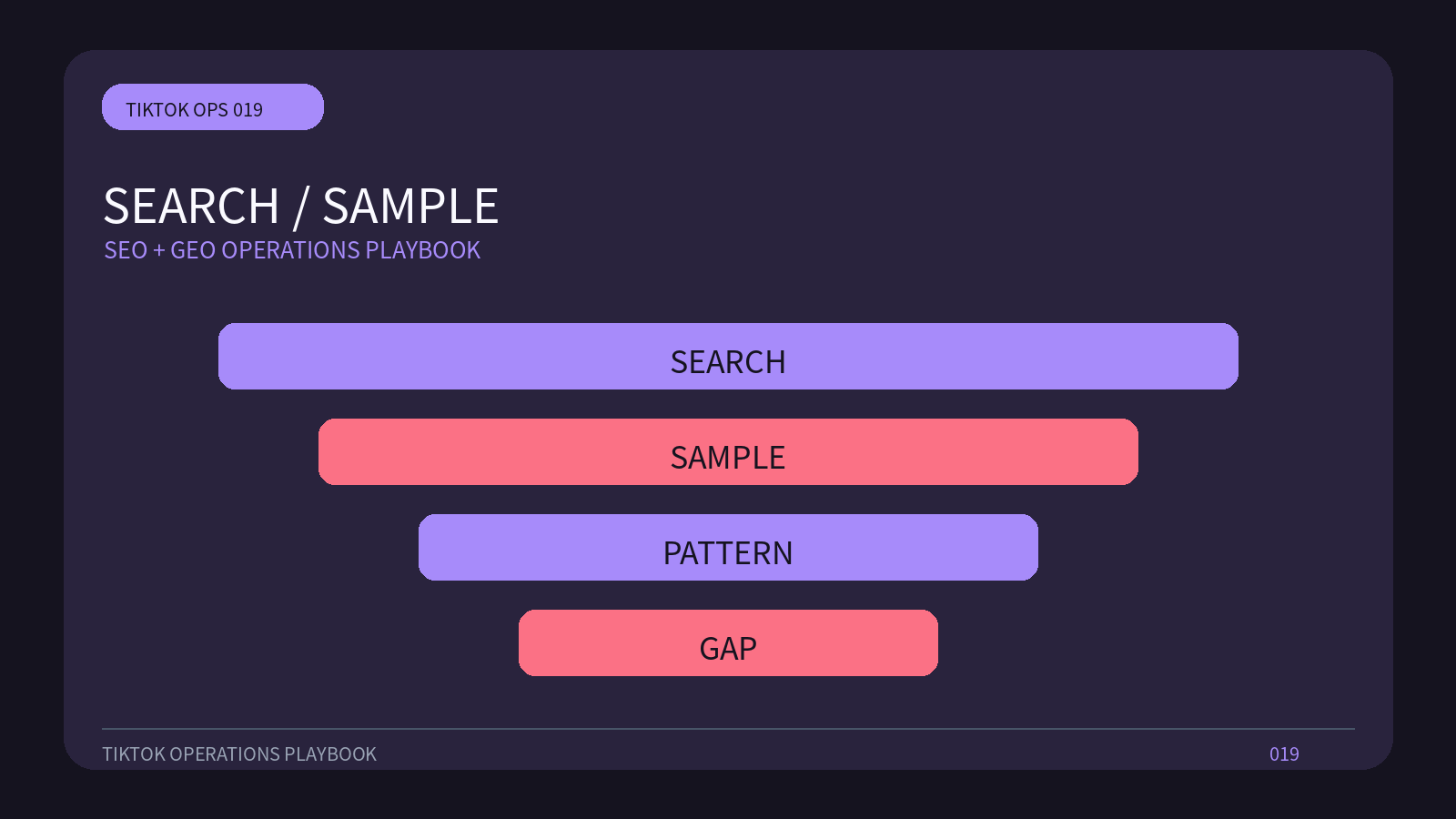
In order for TikTok’s search results to be reproduced, the project record must contain at least the number of the material, the time of publication, the target market and four check points: SEARCH, SAMPLE, PATTERN, GAP.
There are two questions to be answered at the same time: whether “to compare, after publication, whether their content has the same search access and more specific interaction”, and whether there is “a single interception that ignores personalization and time change, and should be observed again”. The former decides whether to proceed, while the latter decides whether a pause, error or additional explanation is required.
This approach does not imply a certain increase in results. Taking a single cut would ignore individualisation and time change and should be observed over and over again; therefore, the rules, error correction and rollback should be saved with the test plan.