
When it comes to “where to put the key words on the video” it is not necessary to look for a universal template. A more reliable judgement is that the core issue should be stated naturally at the beginning and supported by a combination of images, subtitles and illustrations.
Only keywords are placed in the label, which is not a substitute for a clear video expression of the subject matter. This is often not the platform's sudden “no traffic”, but the content commitments, audience expectations or conditions of implementation are not aligned.
Checking the public basis of TikTok ' s key words can be consulted: Creator Seach Insights can be used to observe the search for the subject and content gaps, but the heat of the search must still be judged in relation to the target client, account capacity and subsequent transformation.
The task can be broken down into three nodes: “preparation, publication, review”. The preparatory phase begins with the full question that the user will address, and the text is interpreted in synonyms to avoid repeating keywords; subtitles, images and links are checked for posting; and anomalies and user words are recorded during review.
At the data level, you can see whether search sources and comments are expressed using expected questions.
If there is a product page, a case page and a help page on the same subject, this article can be given the role of explaining the problem and then connect to the next step through a clear inner chain to avoid multiple pages competing for the same query with similar titles.
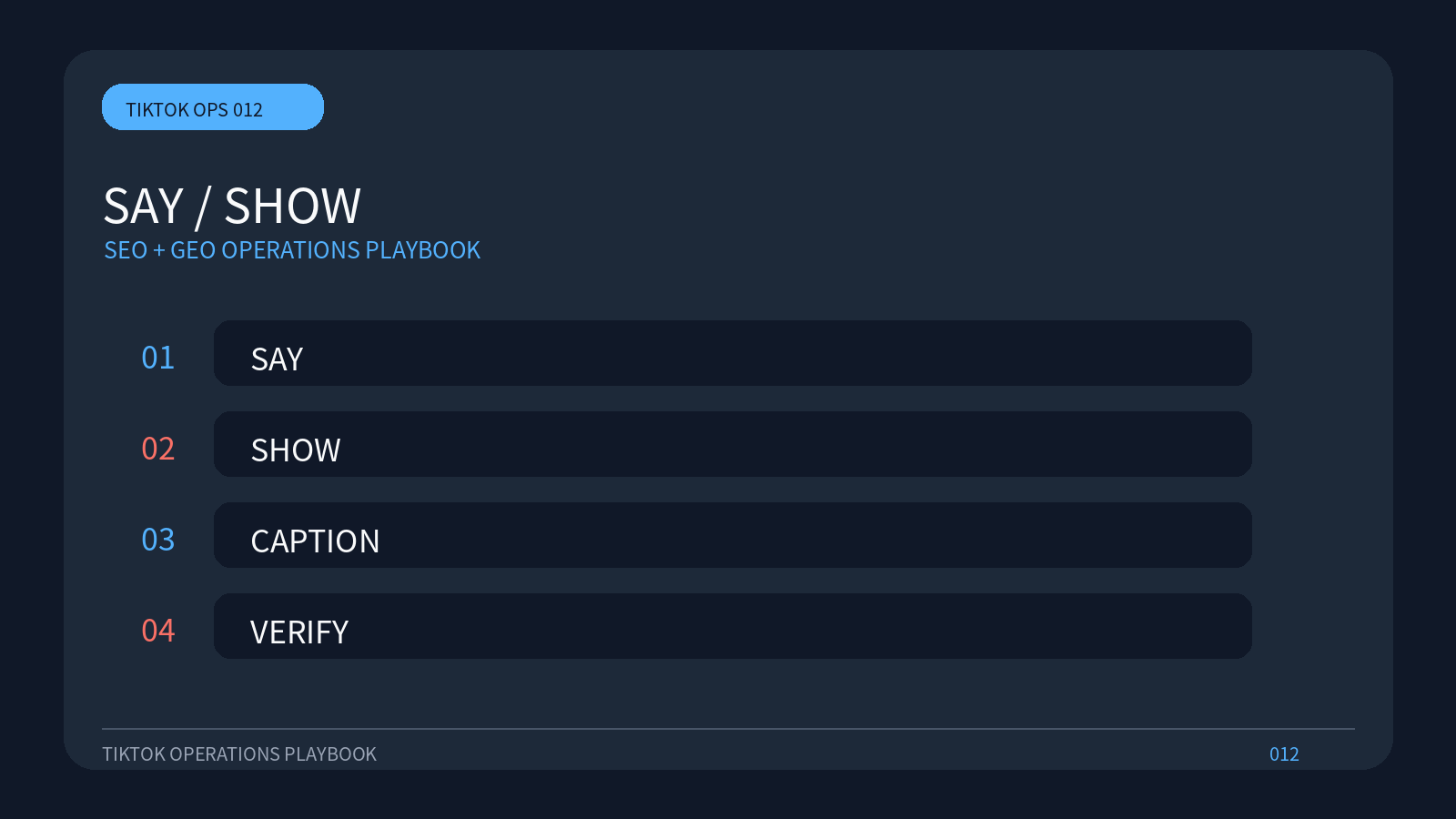
In order for TikTok’s keywords to be reproduced, the project record must contain at least the numbering of the material, the time of publication, the target market and four check points: Say, SHOW, CAPTION, VERIFY.
There are also two questions that need to be answered at the same time: whether to “see if the search source and the comments are expressed using the expected questions” and whether there is “a deliberate high frequency repetition of key words that destroys the natural tone and the viewing experience.” The former decides whether to continue, while the latter decides whether there is a need for a pause, correction or additional explanation.
The release should also be preceded by a reverse check: the deliberate repetition of high-frequency keywords destroys the natural tone and the experience of viewing. If the answer is possible, it reduces the absolute expression and adds to the requirements for decision-making by users.