
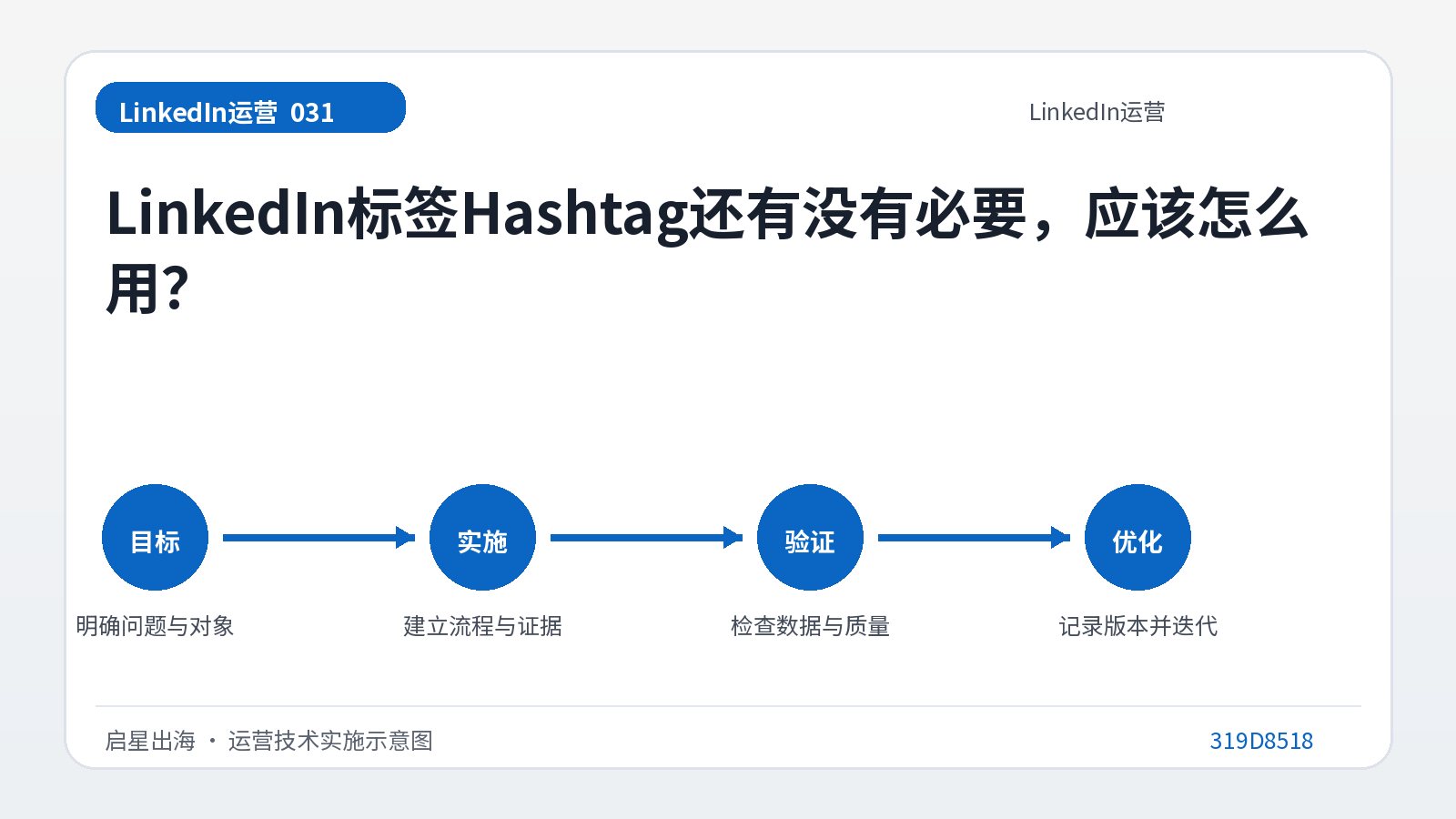
To solve this problem, the four-step method of "cause-action-indicator-decision" can be adopted.The current reason is that heavy stacking of broad and popular tags is not a substitute for clear themes and may lead to irrelevant exposure, which will reduce customer relevance, trust, or subsequent conversions at least one of them.
In terms of action, first select a few words related to the industry, application and customer tasks, and naturally write the core keywords into the text and information.At the same time, determine the target roles before publishing, promptly respond to high-quality comments after publishing, participate in customer topics, record data access and conversations, and conduct periodic reviews based on topics and groups of people., ensuring that customers use consistent positioning, parameters, cooperation conditions and action instructions at every step from seeing the information to entering the sales process.
When it comes to metrics, don’t just look at a single cost or engagement volume.The operation side needs to observe the target customer interaction proportion, repeat interactors, data access, search exposure, attention conversion, effective dialogue and content-assisted business opportunities; the sales side needs to verify the company, role, application, number of specifications, time and follow-up stages.This question specifically compares target reach among non-followers rather than the number of tags.
In terms of decision-making, samples, observation periods and quality bottom lines are pre-set for each test.Don’t rush to draw conclusions when you haven’t reached the basic amount of data; don’t waste it for a long time just to “continue learning” when it obviously attracts the wrong crowd.Organic flow is determined not only by posting, but also by relationship relevance, review quality, ongoing conversations, and engagement after content; the number of interactions must be judged along with the identity of the target customer.
Finally, write the results into the SOP: which conditions should be retained, which situations need to be changed, and which signals can be amplified.Interactive review is not a one-time setting, but a process of continuous collaboration between market, content, data and sales.Solutions that increase the chances of effective conversations and quotes are truly replicable.
When implementing this question, you can first use a small group of real target accounts to verify: select a small number of words related to industries, applications and customer tasks, and naturally write the core keywords into the text and materials.After execution, don’t just judge based on your feelings, but compare the target reach among non-followers rather than the number of tags; at the same time, save the customer identity, version, date and subsequent sales results to avoid mistaking accidental replies for replicable methods.



