
On the surface this is an interactive review issue, but in fact it reflects whether the customer acquisition funnel is complete.The most common breakpoint is: only counting total likes, ignoring that interactors may be peers, job seekers, suppliers, or non-target areas.It will be much more efficient to locate the breakpoint first and then select the tool.
Customer behavior can be divided into four levels: seeing, believing, acting, and qualifying.See dependency-related topics and distribution, believe in dependence cases and evidence, have a clear entrance to action dependencies, and filter by qualified dependency conditions.Organic flow is determined not only by posting, but also by relationship relevance, review quality, ongoing conversations, and engagement after content; the number of interactions must be judged along with the identity of the target customer.If any layer is missing, subsequent conversions will be significantly reduced.
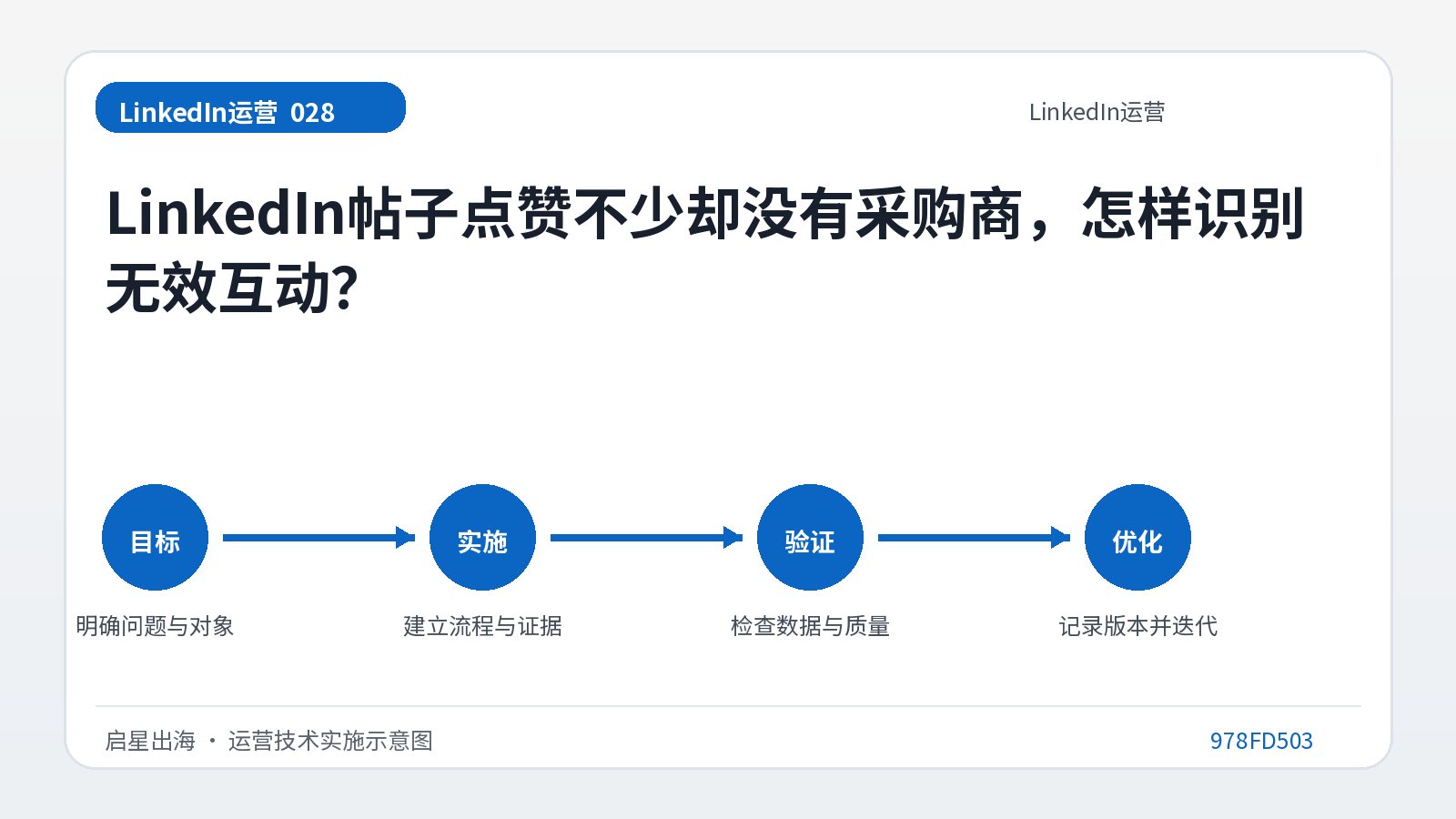
For this question, first check the companies, positions, regions and businesses of the interactors on a sample basis, and mark three categories: target, relevant and invalid.Then determine the target roles before publishing. After publishing, promptly respond to high-quality comments, participate in customer topics, record data access and conversations, and conduct periodic reviews based on topics and groups of people.Check whether the front and back pages are consistent with the sales pitch.It is recommended to keep a change log: modification time, content, reason, expected impact, actual results and next steps to prevent the team from repeated trial and error.
When judging whether it is effective, not only count the proportion of target customer interactions, repeat interactors, data access, search exposure, attention conversion, effective dialogue and content-assisted business opportunities, but also check whether the interactors or leads are from the target country, whether there is a real company, and whether they belong to the role of purchasing or influencing decision-making.Specifically, the proportion of target interactions should be tracked over the long term rather than the total interactions.
If the front-end number increases but the efficiency decreases, it means that the attraction is enhanced but the screening becomes weaker; if the front-end number is stable but the efficiency increases, it is often a healthier improvement.Finally, evaluate free natural flows based on business opportunities that include quotations and sustainable follow-up, rather than drawing conclusions based on single-day results.
When implementing this question, you can first use a small group of real target accounts to verify: check the companies, positions, regions and businesses of the interactors on a sample basis, and mark three categories: target, relevant and invalid.After execution, don’t just judge based on your feelings, but track the target interaction ratio rather than the total interaction over a long period of time; at the same time, save the customer identity, version, date and subsequent sales results to avoid mistaking accidental replies for replicable methods.



