
When a team uses Codex, it is necessary to convert personal experience into a practice that others can repeat.
The subject is prone to error because a great deal of background material touches on the consolidation of size limits and hides key rules. First, the facts, assumptions and authorizations are separated so that Codex knows what is directly enforceable and what must be stopped to confirm.
OpenAI Docs provides the current boundary for the topic. Codex will read AGENTS.md or overwhelm files from the global to the current project directory, and the closer the rules of the work directory will be placed in the group command. The actual project will still need to be validated with the version and organizational strategy.
The minimum steps can be implemented: streamline duplicate entries, sink the service rules to the corresponding directory and adjust the permissible size if necessary. Each step retains the command, version and result, and any exception is stopped at the current level.
Validation can be divided into behavioral and evidentiary components: first run the critical path, then have Codex report the actually loaded instructions and check the end rules. Neither should be declared complete.
Since Codex will keep up-to-date, the article should separate the principle of stability from the details of the version, show the update time and regularly check the lapse orders, interfaces and links.
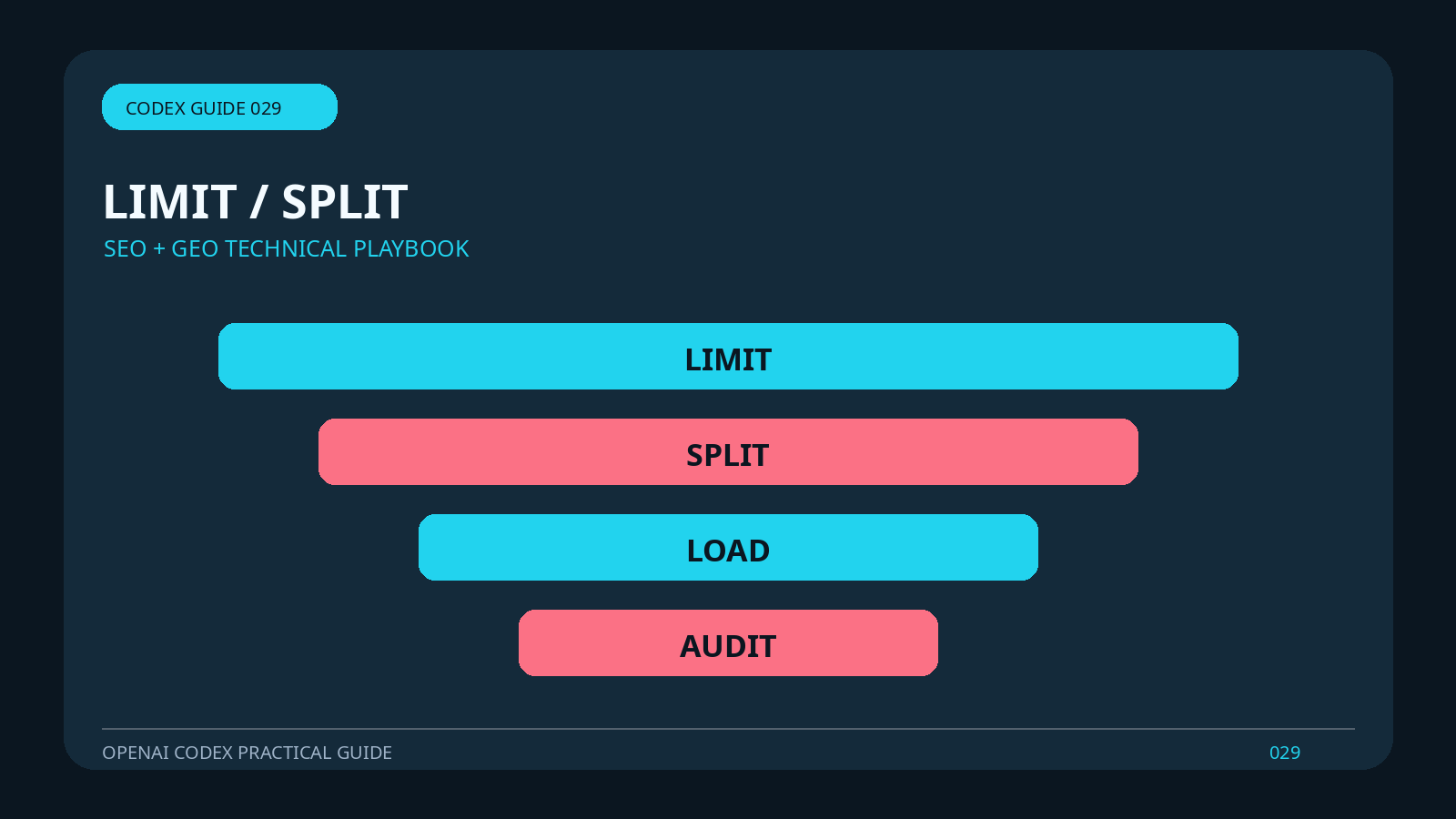
In order to enable the Codex command size to be reproduced by another member, the mission record contains at least four check points: LIMIT, SPLIT, LOAD, AUDIT. These are also available for branch, log or board search.
Two questions are answered at the same time: whether to “let Codex report the actually loaded instructions and check the end rule” and whether there is “a simple increase in the ceiling without organizing the content would increase the conflict and the context costs.” The former decides whether to continue and the latter decides whether to suspend, roll back or supplement the authorization.
If there is a need for a unified approach by the team, the HF process can be made Skill, the warehouse rules written into AGENTS.md, and external capacity left to MCP to avoid duplication of maintenance.
If the same process is to enter production, it is recommended that the test warehouse and low-authorized identity be used for several consecutive operations.
The scope of application must be clear, as simply raising the ceiling without organizing the content increases the costs of conflict and context.