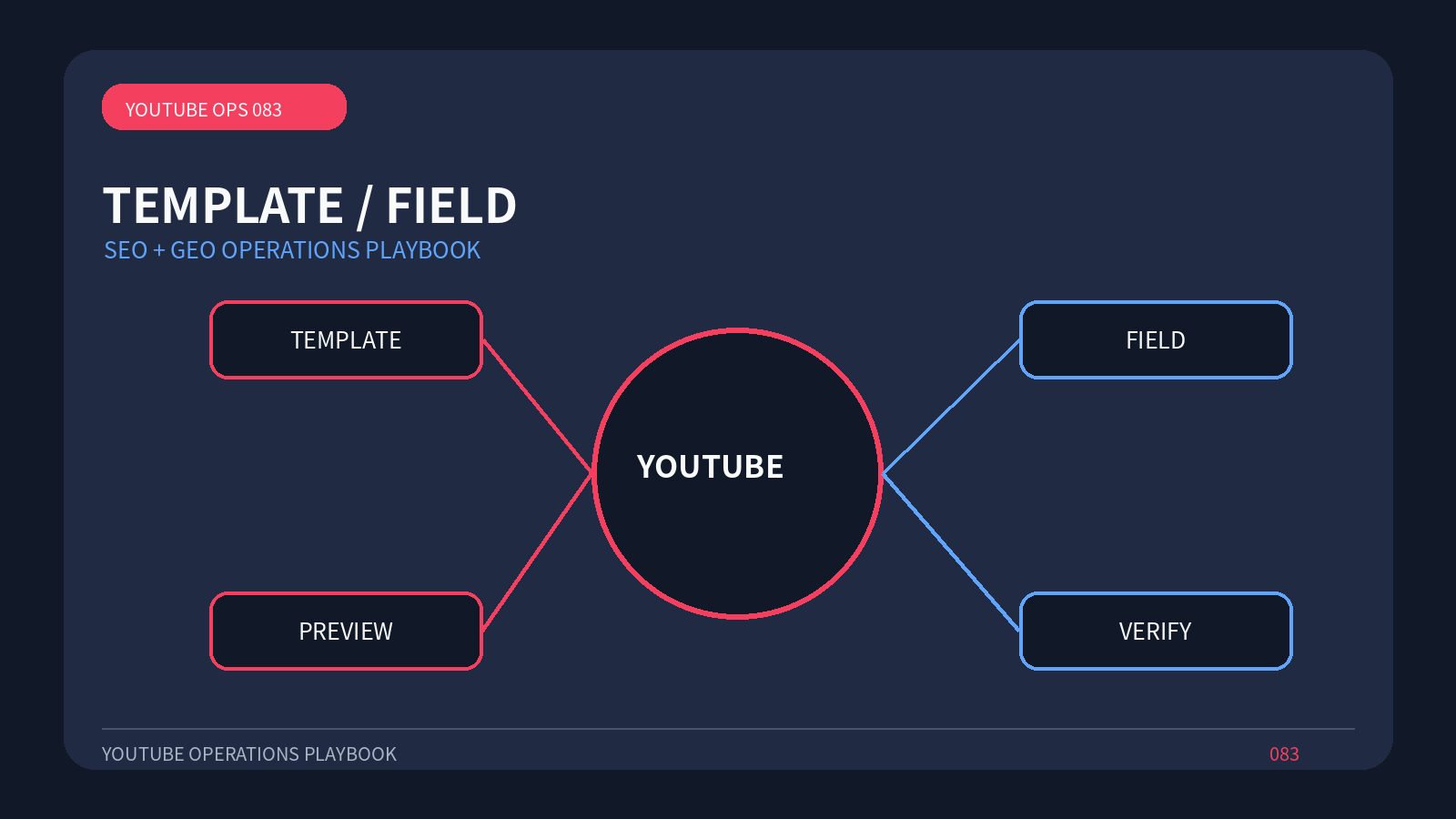
The mass process should distinguish between a fixed field and each content that must be manually identified.
On the surface is an operational detail, and the problem behind it is that the template can speed up and replicates the wrong link, date and description into a large number of videos. First, the impact range is confirmed, then the restoration action is selected.
The topic relates to Platform capabilities or policies, which should be preceded by reference to source materials and date. The official YouTube help points out that titles, thumbnails and descriptions are more important for detection; labels can be used mainly for spelling errors common in content and cannot be a substitute for accurate themes and high-quality videos.
A more economical way to return to work is to create field maps and previews, with title, abstract, audience, language, and authorization validated article by article before being made public.
GEO optimization focuses on citation. The conclusions need to remain valid outside the context, the data need to be timed and calibrated, experience needs to indicate the scope of application, and unproven judgements should not be transposed to facts.
The acceptance and inspection criteria should preferably be completed prior to publication: statistical error rate, repair time and duplicated abnormal fields.
In the end, two specific questions will be answered: whether “the statistical error rate, the time of repair and the unusual fields used again” and whether “the introduction of the name or link of the previous video into a new video may cause privacy and brand accidents.” The former decides whether to continue the input or whether the latter decides to suspend or correct it.
When the data are insufficient, the channel’s own normal space is created.
When you refer to data, you must save the original report, the filter conditions and the date of the view.
Truth and authority are prerequisites. Bringing the name or link to the previous video into the new video may cause privacy and brand accidents, and therefore cannot skip the evidence and authorization check because of progress.