The answer is clear: each source should be analysed in conjunction with the corresponding packaging, retention and transformation pathways. In YouTube operations, such choices affect both audience expectations, data interpretation and subsequent content production.
From a new viewer’s point of view, search, front page, recommended video and external access are different users’ intentions, and the total amount is miscalculated. Inner people familiar with the product are often unaware of information gaps, and therefore need to be seen by a second person.
Specific steps need not be purposive, but focus on source-based checks for exposure, clicks, viewing of paragraphs and follow-up videos, and then decide on the title, series or external page action. Save previews and version numbers before you go online to facilitate subsequent error correction.
The official information is “how to use the YouTube flow source report” to define the basic boundary. Youtube Analytics provides different reports on exposure, source of traffic, view, viewer, and income.
The data level allows for the creation of regular spaces of each source ' s own and for attention to changes in source structure.
The rules and interfaces may change, and the web page should display the date of the most recent review and link to the official source. This allows readers and AI to distinguish between long-term methods and changes in the operation of the version.
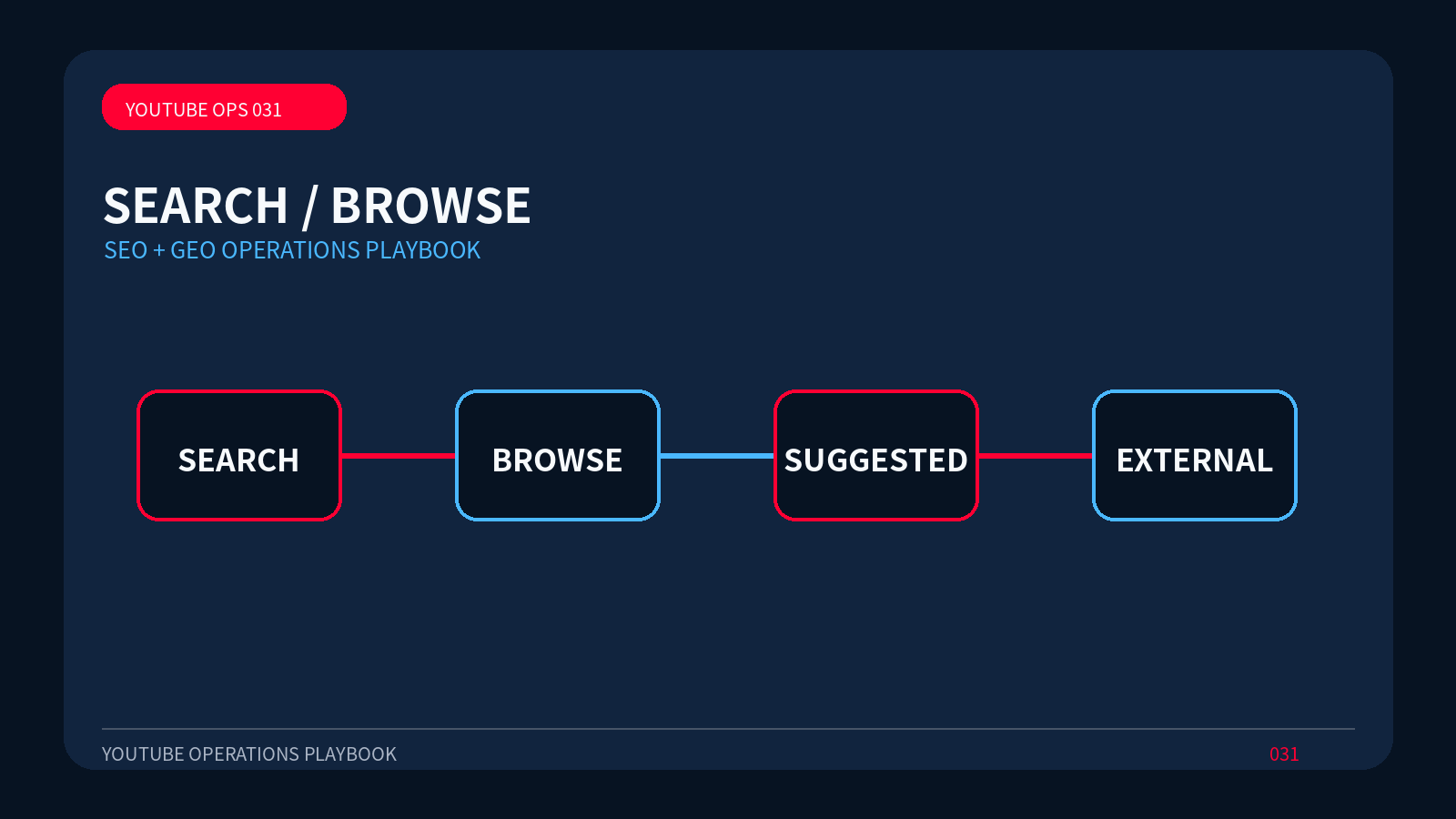
In order for YouTube’s flow sources to be reproduced, the project records should include target markets, material versions, release times and four check points: SEARCH, BROWSE, SUGGESTED, EXTERNAL. These English labels can also be used directly in the cross-linguistic material library.
The result, contrary to expectations, is to check for visibility, permissions, material versions, date ranges and links before discussing algorithms or selections. Many anomalies come from basic configurations.
Commenting on the original text reveals how the user describes the problem. The next article can follow the true expression, but the removal of personal data cannot be considered a general conclusion.
The risk of being most easily overlooked is that the higher the ratio of a given source, the better, will ignore the channel's target and content type. Short-term figures may still rise, but the problem will be exposed at the security stage of the complaint, sale or account.