Read user missions first, then algorithmic terms. Visiters can help judge the continued value of content commitments, but still need to integrate business objectives.
Write action as a tickable inspection item will be more stable: establish a fixed series and a reasonable release rhythm, avoid overcoming each issue and supplement the needs with community feedback.
When checking the public basis of the topic, you can first confirm this: YouTube provides different reports on exposure, traffic sources, viewers, viewers, and income.
It is easy to make mistakes because the total view may come from a one-time hot topic and does not represent a stable relationship with the channel.
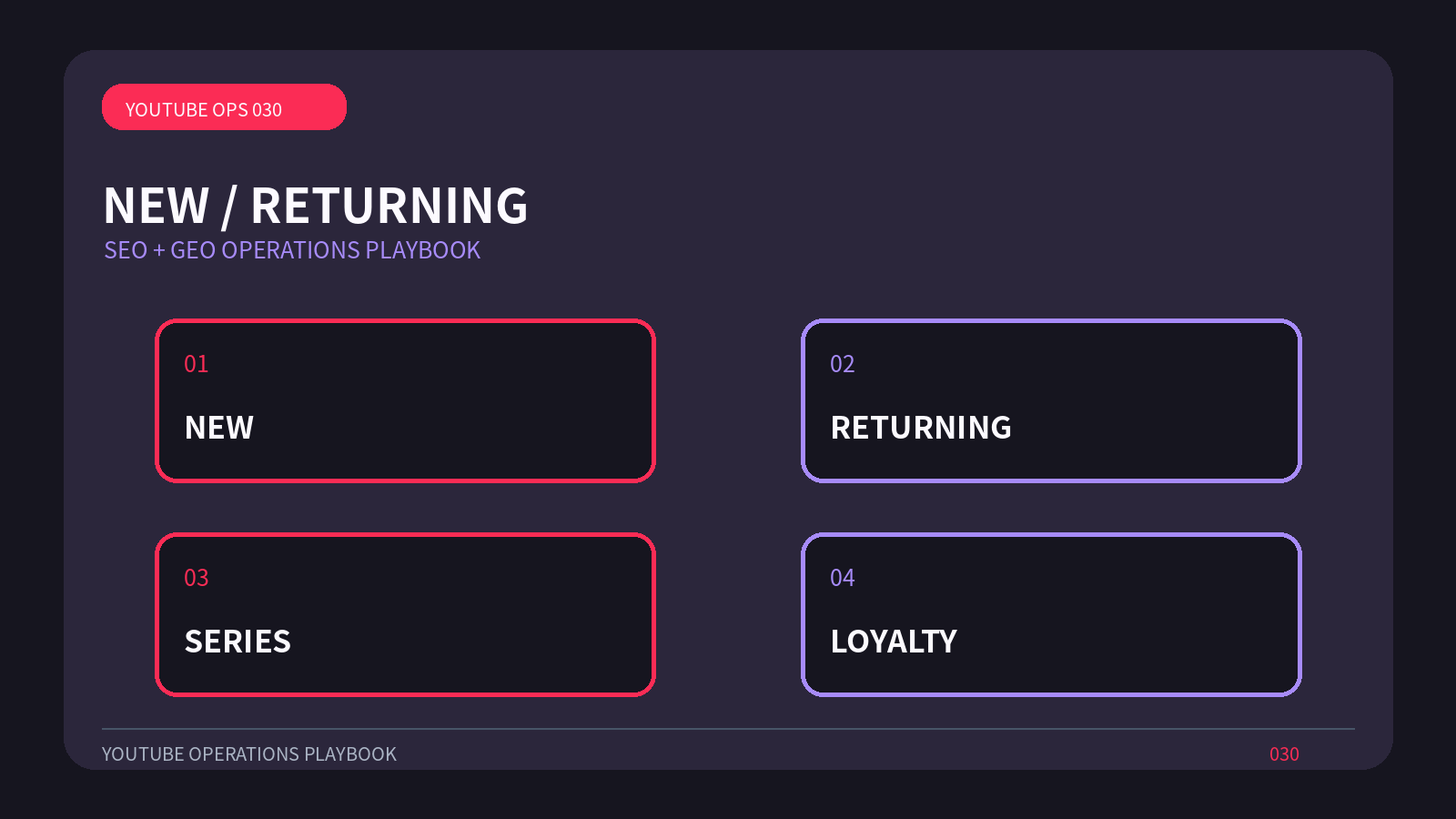
In the end, two specific questions are answered: whether it is possible to “see the trends of the new viewer and the returning viewer, the series and the view after the subscription”, and whether it is possible to “understand the return visit simply as a poor content and may ignore seasonal and one-time search features.” The former decides whether to continue the input or whether the latter decides to suspend or correct it.
The effects are judged by looking at the new viewer's and returning viewer's trends, serials and after subscription.
Once it has been found that “the simple explanation for the low level of return visits is poor and may ignore seasonal and one-time search features”, the original version, the impact range and the restoration action should be recorded, rather than simply deleting the content without a basis for a duplicate.
When you refer to data, you must save the original report, the filter conditions and the date of the view.
In order for the search engine and the AI system to understand it accurately, the video could be organized into a stand-alone web page, which would correct the entities and numbers in the text and complement official sources, author information, photoalt and related inner links.