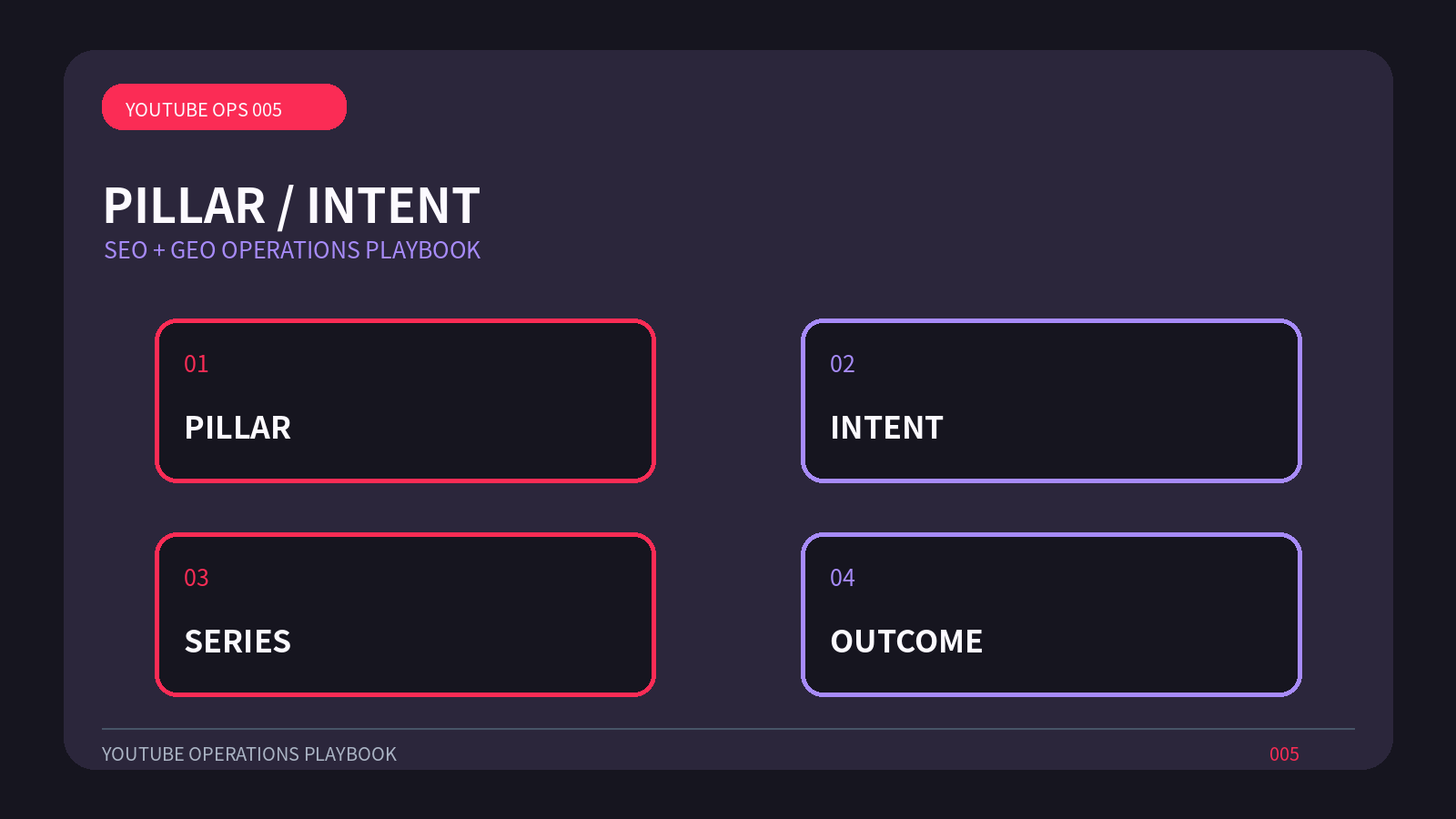
If the team can only unify one principle, it should build a few sustainable pillars around the same audience, each with different decision-making tasks. It can turn subjective preferences into reversible content decisions.
A common bias is that the themes are too dispersed to build up audience expectations, too narrow and difficult to update in the long term. This allows the team to attribute the results to the Platform without checking the consistency of content commitments, audiences and implementation conditions.
Do not crush the indicator into a fraction. The search flow, view depth, return and transformation contributions of each pillar should be compared, while maintaining the original comments, anomalies and configuration changes.
The order of implementation is important. First, the correctness of the facts and rights is ensured, then the three to five categories are selected from the introductory education, programme comparison, operational demonstration, case evidence and questions, before the best packaging and production can be achieved.
When checking the public basis of the subject, this can be confirmed first: Google’s guidance on helpful content emphasizes a real audience, demonstrates direct experience and provides credible information. Search optimization cannot replace actual value by batch rewriting and repetition of keywords.
Ultimately, it answers two specific questions: whether to “comparison the search flow of the pillars, view depth, return visits and transformational contributions” and whether “to use the camera format as a pillar would ignore what the user really wants to solve.” The former decides whether to continue with the input, while the latter decides whether to suspend or correct it.
GEO optimization focuses on citation. The conclusions need to remain valid outside the context, the data need to be timed and calibrated, experience needs to indicate the scope of application, and unproven judgements should not be transposed to facts.
The content requires a complete service task. If the user is to compare, install, type or request, the page should provide the information necessary to perform the task, rather than deliberately breaking the answer.
The same term may be used in different markets for different products or buying habits.
True facts and rights are a prerequisite. Using the camera format as a pillar, it ignores the problems that users really want to address, and therefore cannot skip the examination of evidence and authorization because of the progress made.