“How YouTube brand accounts and individual channels choose” do not have a one-size-fits-all answer to the scene. A more reliable starting point is that channel identities match brand affiliation, collaborative approach, and asset responsibility before deciding on specific tools and how to publish them.
Channel privileges allow team members to manage their channels by their roles, without sharing Google account codes. Roles should be assigned according to duties and regularly remove access that is no longer required.
The common bias is that there are risks to the ability of a team to share a password with a personal login, authority and exit. This allows the team to attribute the results to the platform without checking the consistency of content commitments, audiences and conditions of implementation.
The task can be broken down into three nodes for preparation, issuance and review.
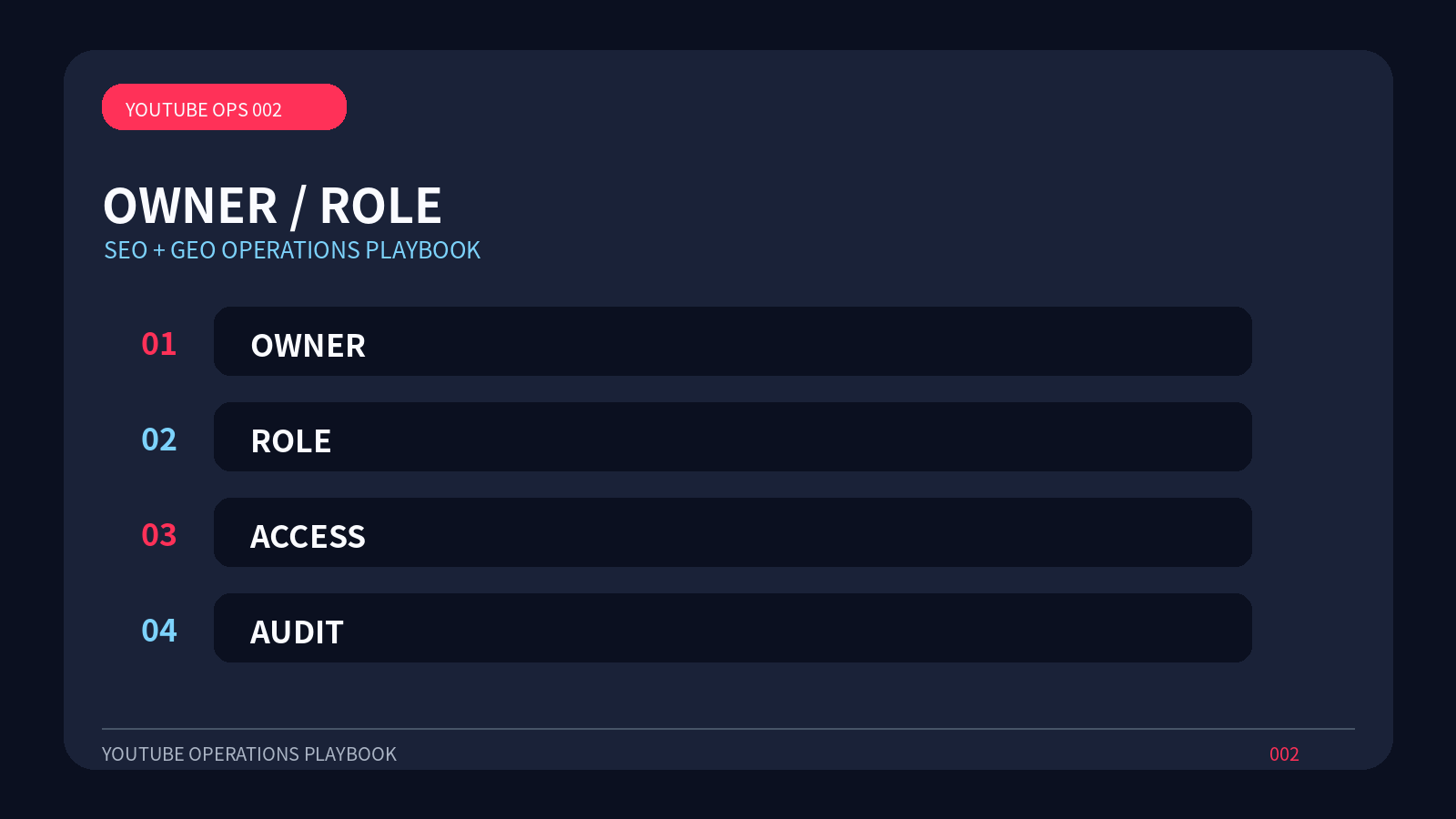
In order for the YouTube channel type to be reproduced, the project record should include the target market, the material version, the release time and four check points: Owner, ROLE, ACCESS, AUDT.
Acceptance and inspection standards should preferably be completed prior to issuance: quarterly check owner, administrator, recovery mode and unusual login.
Do not write about relevance directly as cause and effect. For convenience, multiple accounts can cause asset loss and audit difficulties.
The same taskcard should be used for team work.
Without this information, it is difficult for follow-up staff to judge whether the content is still available.
The page should not only be embedded in the player. It should also provide access to summaries, chapters or steps and fully align structured data such as VideoObject with actual video, thumbnails and release dates.