First, the answer is clear: the main audience and business tasks are selected, and then the columns, the rhythms, and transformational actions are decided. In YouTube, such choices affect both audience expectations, data interpretation, and subsequent content production.
The common bias is that when a channel simultaneously pursues brand exposure, buys, trains, and sells, content and indicators are easily conflicting. This allows the team to attribute the results to the platform without checking the consistency of content commitments, audiences, and conditions of implementation.
Upon landing, it is recommended that a small sample be made: the three categories of annual operational objectives be broken down into cognitive, comparative, operational, and only one main transformation entry is maintained.
Official information sets the basic boundary for “business YouTube” to determine what should be the first target. Google’s guidance on helpful content emphasizes a real audience, direct experience and credible information.
The results are judged separately by checking the viewer, the brand search, effective access and the quality of the thread.
When the subject is taken up on the website, the title should correspond directly to the user ' s question, with the first paragraph giving an independently understandable answer, rewriting the subject, conditions, steps, evidence and limitations in the text and indicating the date of review.
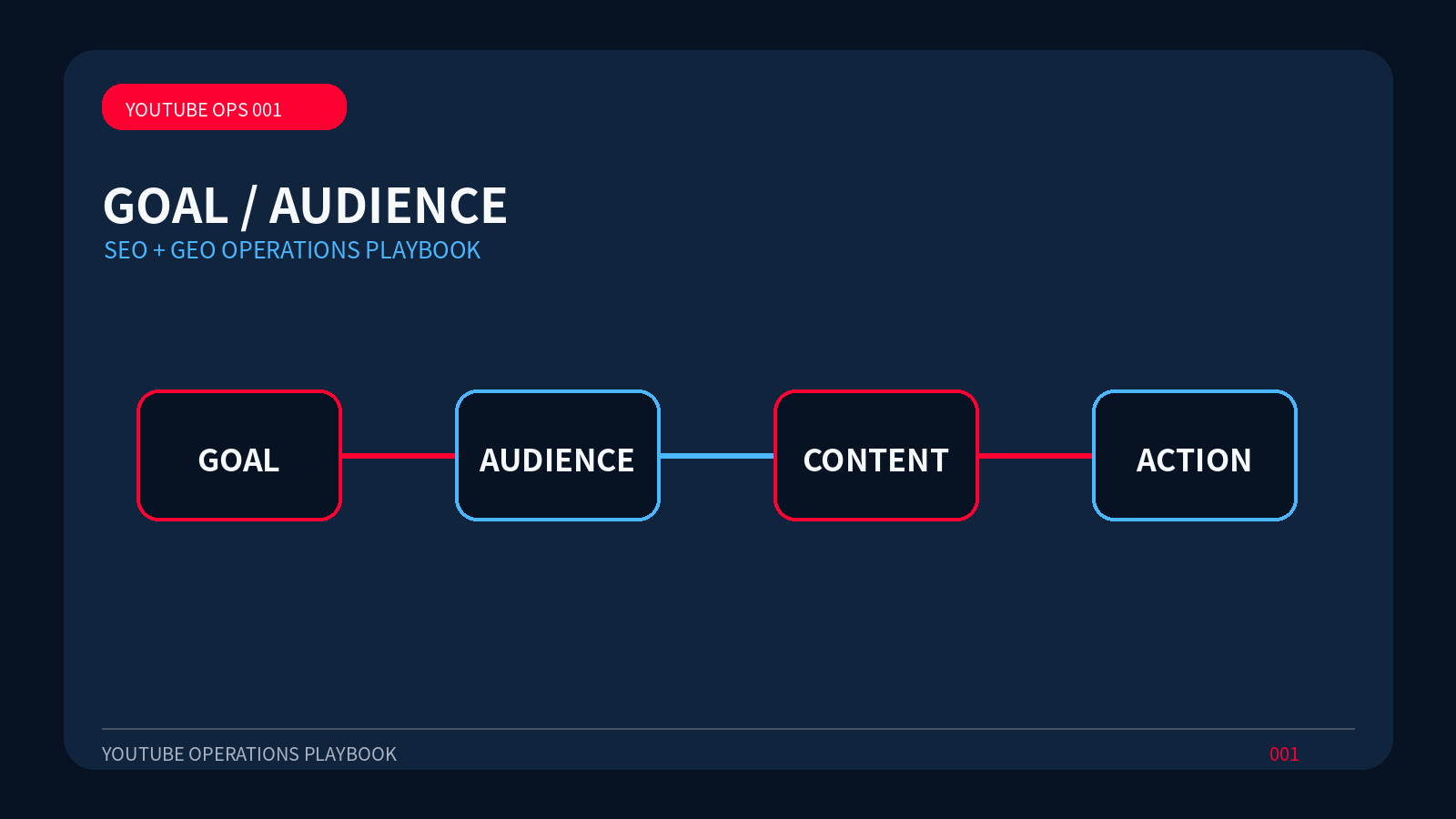
In order for the YouTube channel target to be reproduced, the project record should include the target market, the material version, the release time and four check points: GOAL, AUDIENCE, CONTENT, ACTION.
The content asset is best placed to use uniform serial numbering questions, scripts, masters, subtitles, thumbnails, web pages and release records.
The same taskcard should be used for team work.
What needs to be avoided is that a successful definition of a number of subscriptions only ignores whether a channel solves real business problems. Information that cannot be publicly validated should indicate source, condition or uncertainty and cannot be packaged into platform rules.