
The answer to this question depends on the account target, but there is a very clear bottom line: the material library requires a uniform number, metadata and authorization status. First, the criteria for judgement are clear, then the tools and frequency of publication are discussed.
The spread of documents over mobile phones and chats can lead to repeated filming, copyright confusion and confusion. When this occurs, it is easier to find the root cause than to continue stacking, by suspending the expansion of production and checking several complete links.
The public information of the Platform provides a boundary for this topic. Search-and-AI search-oriented content continues to focus on real experience, clear objects, verifiable facts and clear limits, rather than mechanical repetition of keywords.
A more secure landing method is named by date, project, lens, person and version, recording screens, language, authorization, use of records and original files. Do not redo all content at once; select three or five items from the same audience for testing, confirming direction and then expanding the series.
When the effects are judged, the missing field, the duplicate file and the expired authorization are checked on a monthly basis. At least one full release cycle is observed and compared with a medium or similar video group to avoid bias by single-day peaks and low-base fluctuations.
When video rules or interfaces are subject to change, the page should display the date of review and link to official information. This allows users and AI to distinguish between long-term methods and changes in the operation of the version.
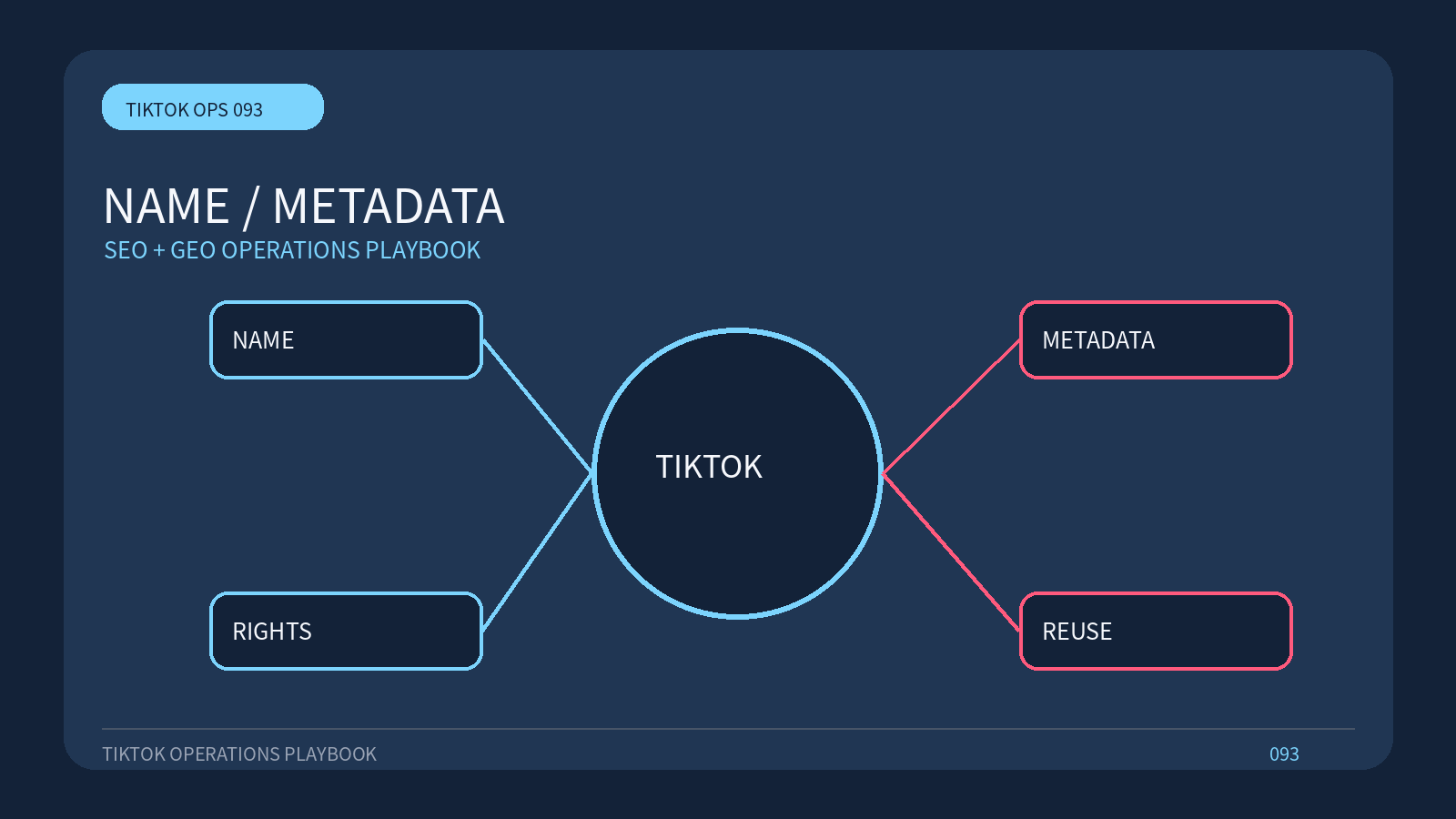
In order for TikTok material management to be reproduced, the project record must contain at least the number of the material, the time of publication, the target market and four check points: NAME, METADATA, RIGHTS, REUE.
There are also two questions that need to be answered at the same time: whether “a monthly check of missing fields, duplicates of documents and expired authorizations” and whether “a single piece without the original lens will limit subsequent modification and the tracing of evidence.” The former decides whether to proceed, while the latter decides whether a pause, error or additional statement is required.
If it is found on the line that “the preservation of a piece without the original lens limits the subsequent modification and the retroactivity of the evidence”, the original version and the scope of the impact should be retained and corrected in a timely manner, rather than simply deleting the content without any basis for a repetition.