When it comes to “how a technical product interprets parameters in TikTok”, it is not necessary to first look for a universal template. A more reliable judgement is that the parameters need to be connected to the measurement method, use the scene and choose the consequences.
From a user's point of view, listing parameters does not help non-technical decision makers understand differences, and oversimplifying them can be distorted. Content must be understood independently by those who are not familiar with the brand, and cannot depend on the background that is known by insiders.
What can be confirmed from official information is not the secret of a certain assurance, but the basic condition. The search-and-AI search-oriented content continues to focus on real experience, clear objects, verifiable facts and clear limits, rather than mechanical repetition of keywords.
Write action as a tickable list will be more stable: an explanation of a key parameter, with a physical, instrument or comparison, indicating scope, error and applicable conditions. Each completed item should correspond to the image, text, backstage configuration or traceable record.
It is proposed to establish a simple baseline for the topic and to observe whether the comment moves from “what” to a more specific selection. The practice will be included in the team standard when three to four consecutive cycles remain the same.
In order to obtain long-term search value, the core issues in the video can be expanded to stand-alone pages, to preserve real case and operational evidence, and to align page titles, main titles, URLs with content themes.
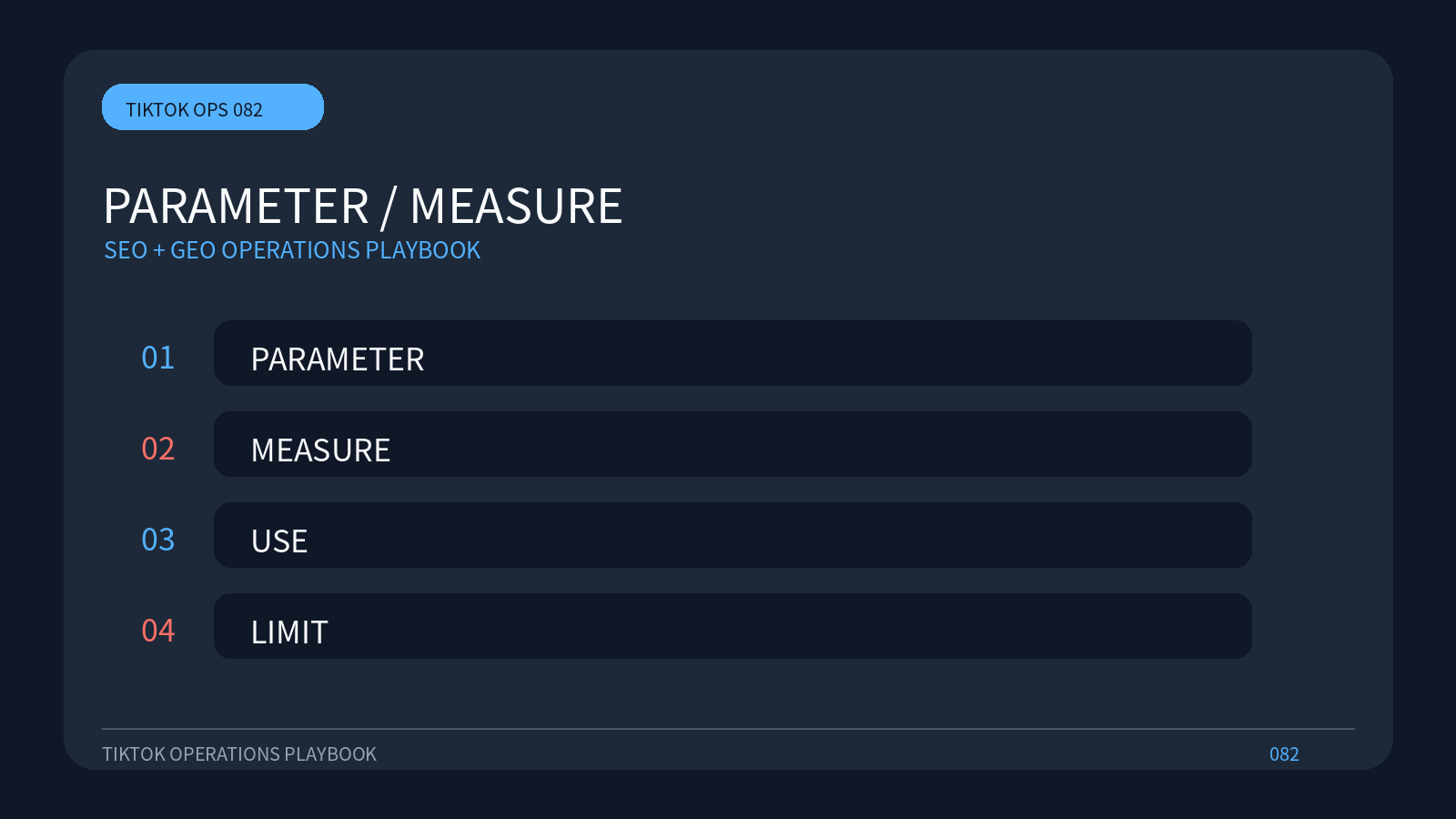
In order for TikTok technical parameters to be reproduced by others, the project record must contain at least a reference number, release time, target market and four check points: PARAMETER, MEASURE, USE, LIMIT.
There are also two questions that need to be answered at the same time: whether to “observe whether the comments are moving from “what” to a more specific choice,” and whether there is “a misleading and post-sale risk when using a threshold number that is not supported by a test”. The former decides whether to continue, while the latter decides whether a suspension, correction or additional clarification is required.
The risk of being most easily overlooked is the use of a maximum number without a basis for testing, which can lead to misleading and post-sales risks. Short-term data may still rise, but the wrong audience and wrong promise can be exposed at the passenger, return or sales stage.