
In practice, TikTok preferences convey the standard answer that does not leave the scene. An enforceable starting point is that preferences must allow users to understand the real conditions before they act.
If the problem is reduced to a good or bad algorithm, the key facts — price, duration, inventory, and conditions of application are not clear — will result in complaints and invalid hits.
What can be confirmed from official sources is not the secret of a certain guarantee, but the basic condition. TikTok Shop’s rules for goods, live broadcasts and compliance are subject to market changes, and the current requirements should be checked in the Shop Academy or seller backstage at the target site before being released.
It is recommended that a short taskcard be created: who is the target, what is to be addressed, where the evidence comes from, and what the user wishes to do when it is completed.
You should check the amount of the billing, customer service problems and refund complaints.
Search optimization does not amount to copying the same keyword. The title uses user problems, and the text naturally appears in entities such as brands, products, areas and platforms, with a meaningful picture and accurate ALT, and the information becomes more complete.
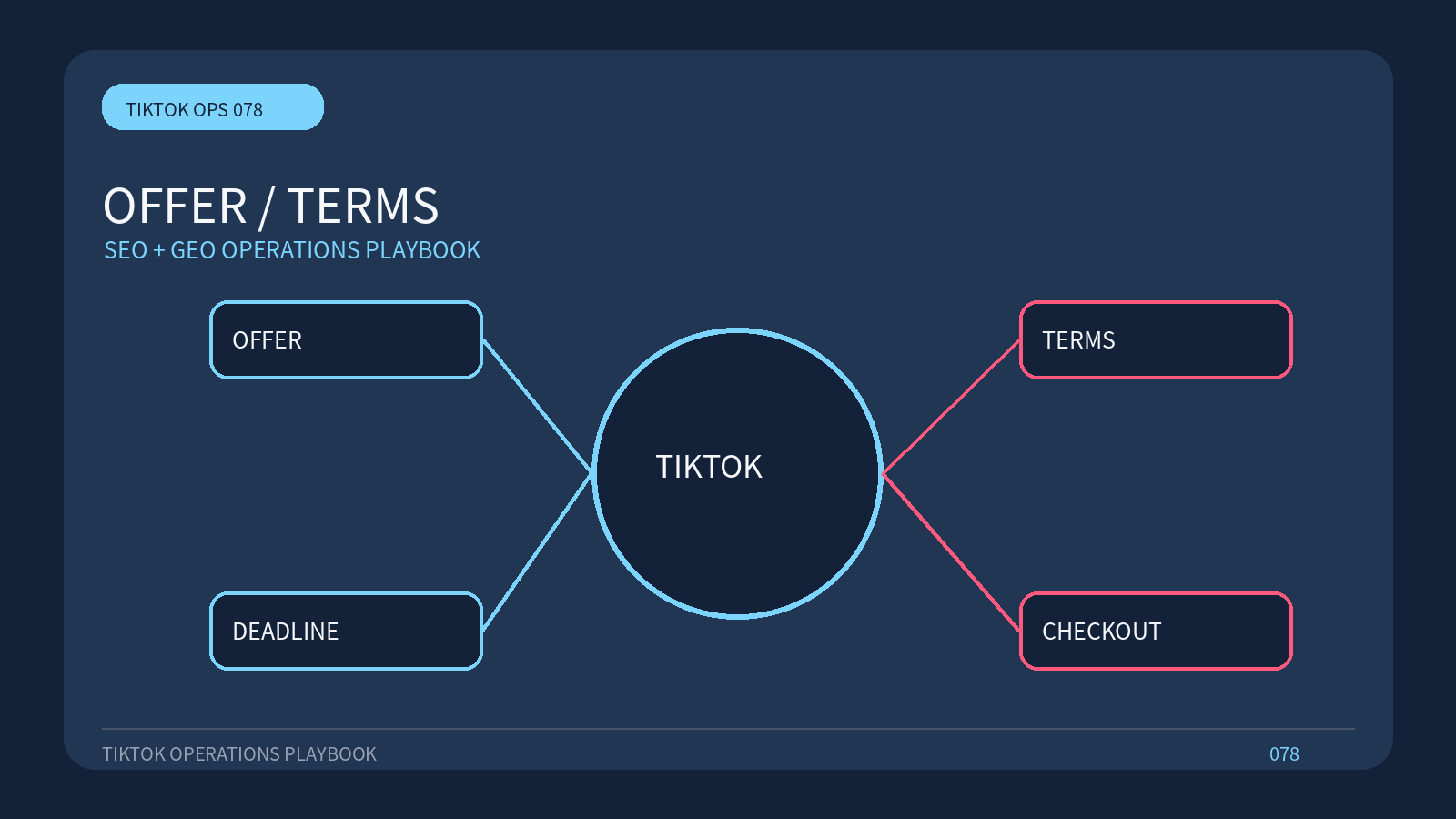
In order for TikTok’s preferential expression to be reproduced, the project record must contain at least a reference number, release time, target market and four check points: OFFER, TERMS, DEADLINE, CHECKOUT.
There are also two questions to be answered at the same time: whether to “reconciliate the amount of the settlement, the question of the client's service and the complaint of a refund” and whether “the use of a permanent countdown, a vague original price or a hidden condition would undermine trust and may violate the rules.” The former decides whether to continue, while the latter decides whether a suspension, correction or additional explanation is required.
It should also be preceded by a reverse check: the use of permanent countdowns, vague original prices or hidden conditions can undermine trust and may violate the law. If the answer is possible, it reduces absolute expression and adds to the requirements for decision-making by users.