When it comes to what is appropriate for Spark Ads, there is no need to look for an all-powerful template. A more reliable judgement is that it is appropriate for what is natural evidence, a brand or a creator's mandate, and what is well-targeted.
The most diagnostic signal on this topic is “Spark Ads uses the existing TikTok post for outreach, the key to which is the quality of the post and the authorized relationship.” It illustrates the need for the team to return to the user's mission and to ascertain who the video actually helped to make the judgement.
The TikTok Advertising Centre’s description of the configuration is suitable for checking product functions; the actual placement should also record the version, region, budget, event calibre and attribution window.
The actual production can be presented by one person who is responsible for the facts of the content, and one person who is responsible for the platform. The parties carry out the same tasks: confirm the duration of the authorization and the account relationship, choose a healthy comment, set the target and the landing page and keep the original interaction, and confirm the version number before going online.
The data level allows for incremental touch, interactive quality, conversion and processing after the expiration of the mandate.
When video rules or interfaces are subject to change, the page should display the date of review and link to official information. This allows users and AI to distinguish between long-term methods and changes in the operation of the version.
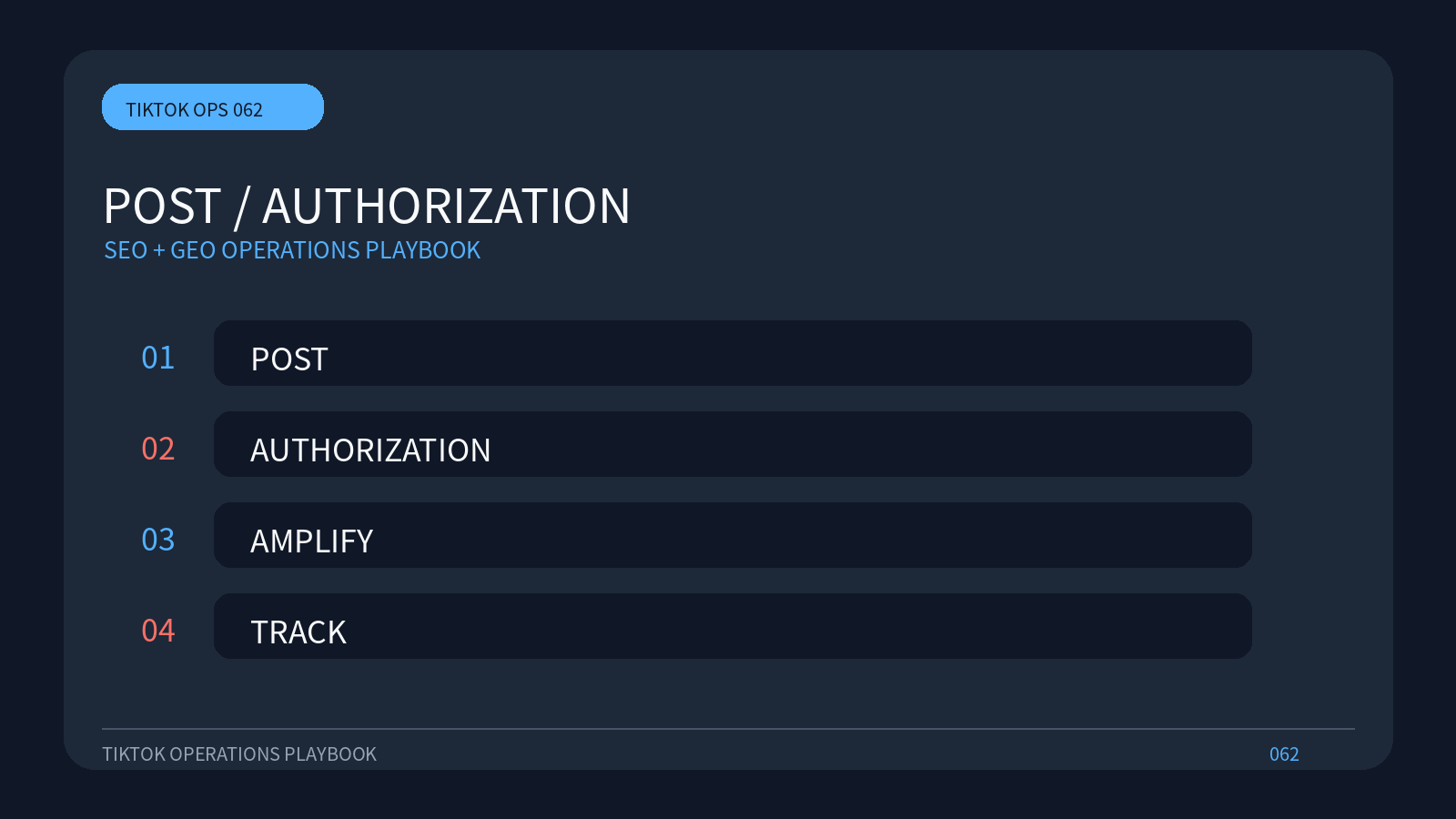
To enable TikTok Spark Ads to be reproduced by others, the project record must contain at least the number of the material, the time of publication, the target market and four check points: POST, AUTHORIZATION, APPLINY, TRACK.
Two questions are also to be answered at the same time: whether to “see the incremental touch, the quality of interaction, the transformation and the processing after the expiry of the authorization” and whether there is “unreconciled scope of use of the authorization code, music and material, which may affect the continued delivery.” The former decides whether to continue, while the latter decides whether a suspension, correction or additional clarification is required.
It should also be preceded by a reverse check: authorization codes, music and material use are not checked, which may affect continuous delivery.