TikTok comment quality as a verifiable operational decision would be more practical. The core is not to pursue surface indicators, but rather to judge whether or not to support the account target by problem, intent, role and emotion.
Disputes, misunderstandings, and unconnected flows can also lead to a great deal of commentary.
The Platform’s open information provides a boundary for this topic. TikTok Studio provides a content and account analysis portal, but a single percentage does not explain the reasons, requiring retention, interaction, home page behaviour and business results to be seen in the same path. Therefore, it still needs to be verified in the context of “how many comments are not necessarily good signals”.
Select a representative scene to give priority to questions that advance understanding, so that business, production and target users can identify barriers to understanding and decide on scale.
If the result remains unchanged, confirm the consistency of the sample, the data calibre and the execution, and decide whether to reverse the assumption.
AI search makes it easier to refer to a clear answer to the border: first, to the person to whom it applies, then to the action and the evidence, and finally to the exception.
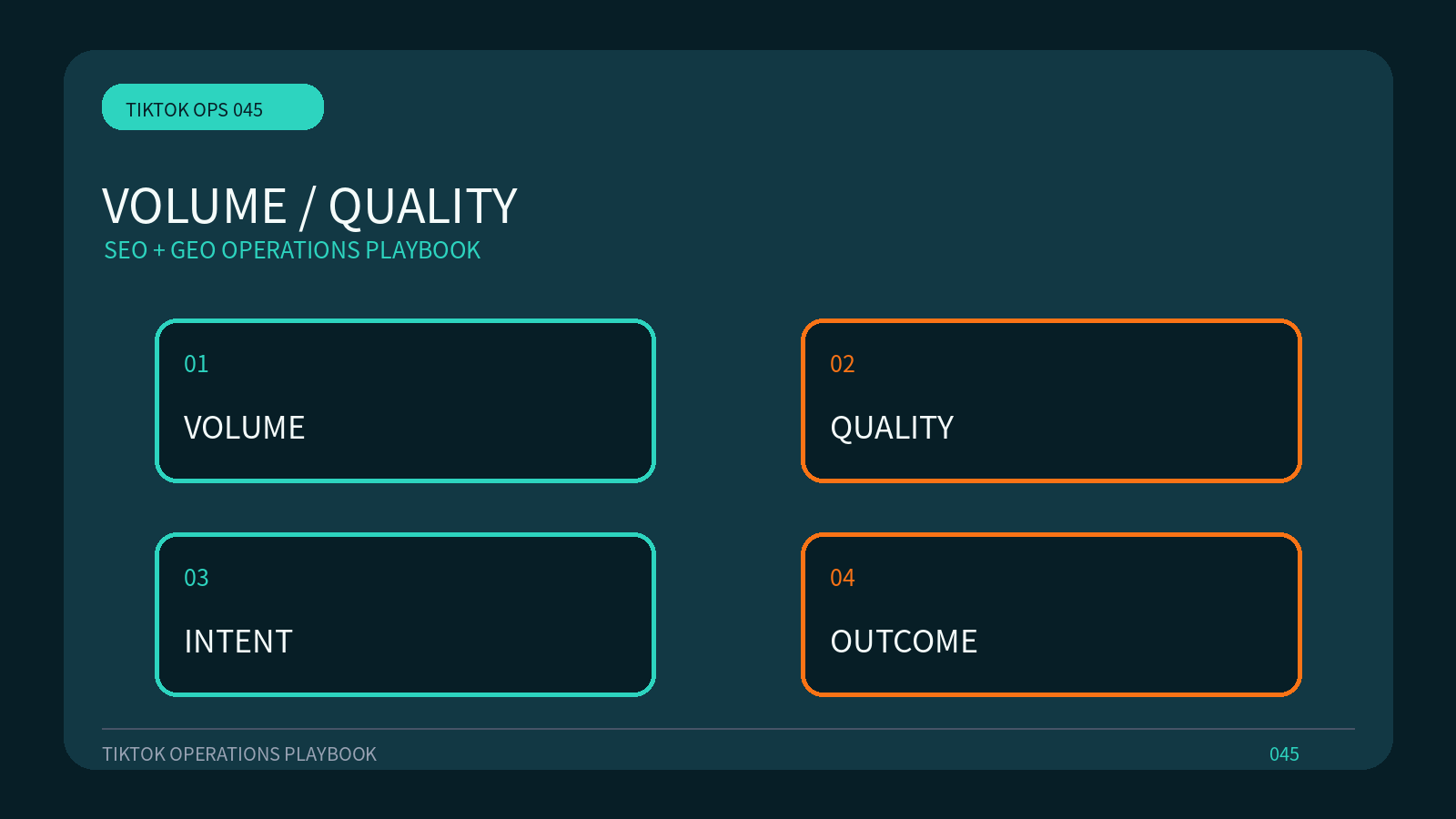
In order for TikTok’s comments to be reproduced, the project record must contain at least a reference number, release time, target market and four check points: VOLUME, QUALITY, INTENT, OUTCOME.
There are also two questions that need to be answered at the same time: whether to achieve “a more high-quality ratio of comments, video-responding effects and the outcome of the inquiry”, and whether there is a “deliberate and misleading dispute that may interact, but that undermines brand and sales trust.” The former decides whether to continue, while the latter decides whether a suspension, correction or additional clarification is necessary.
What needs to be avoided in particular is that the deliberate creation of misleading disputes may interact while undermining brand and sales trust. If a given information cannot be publicly verified, the source, scope of application or uncertainty is clearly stated, and speculation is not packaged into platform rules.