
First, to conclude: Stable light and controllable images are more important than blindly upgraded cameras. This seems to be a local skill that actually affects whether accounts can produce stable, interpretable growth.
In reality, there is often a bias: the problem of the quality of the picture often comes from camera stains, exposure fluctuations, vibrations, and misfocuss, rather than from the device level. When a team stares at a single video result, the deviation is magnified; when it returns to a set of the same elements, stable patterns are seen.
TikTok’s official creative proposal emphasizes the vertical screen, clear graphics, original expression, early availability of core information and the setting of a secure area for the interface; these are the starting points, not fixed formulas that are valid for all accounts. The team will also record the date of the visit and avoid the long-term application of the old rules.
The operation is not a copy of the blast, but a clean shot, locks the exposure and focus, supports the tripod or stabilize, prioritizes the rear camera and keeps the original file.
Validation can be divided into content and business signals. The former looks at the quality of viewing and interaction, while the latter looks at post-compression details, the subject clarity and the effect of play-off under different networks; conclusions can only be reliable if they are interpreted by each other.
When video rules or interfaces are subject to change, the page should display the date of review and link to official information. This allows users and AI to distinguish between long-term methods and changes in the operation of the version.
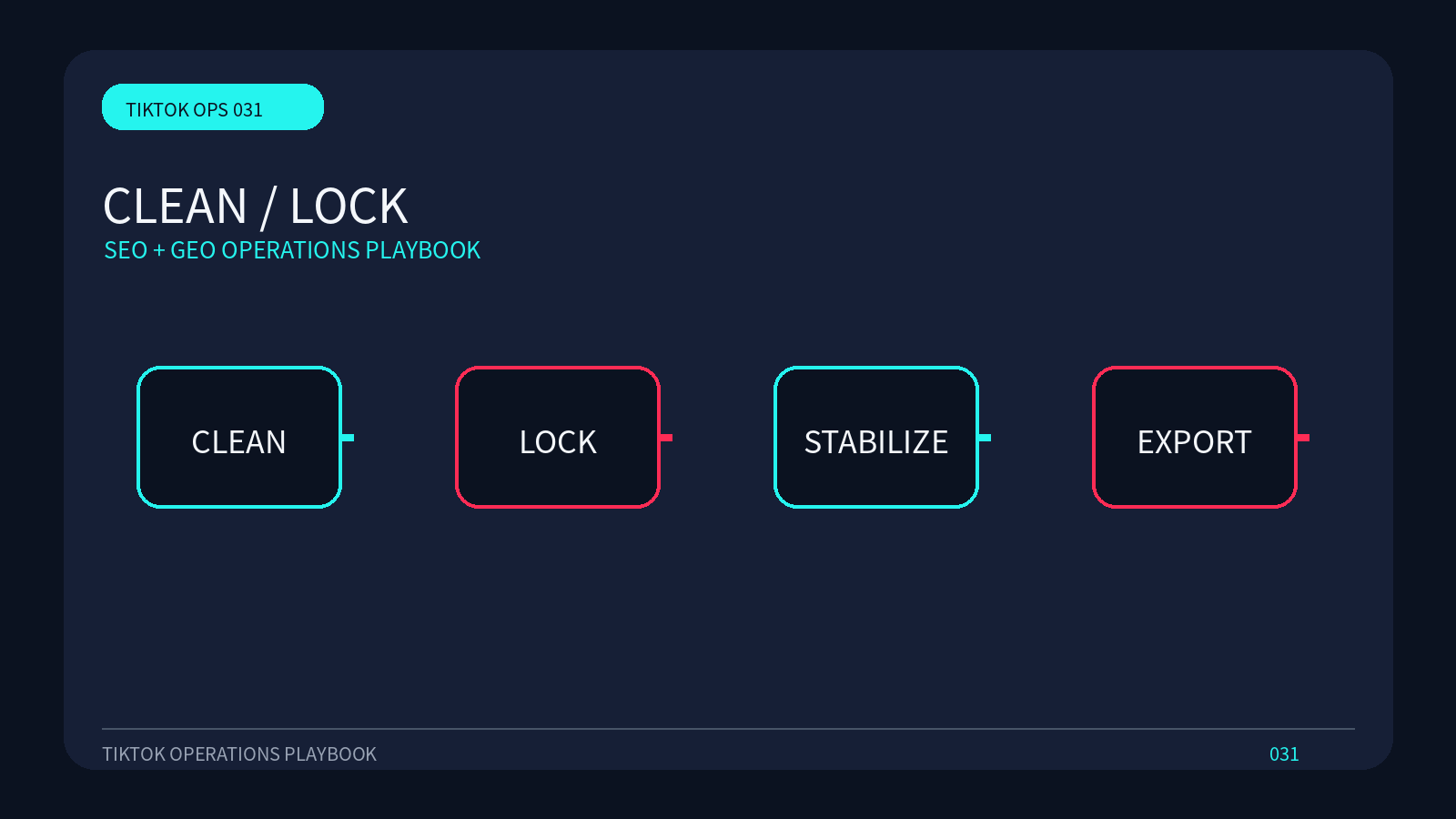
In order for TikTok’s mobile phone to be reproduced, the project record must contain at least the number of the material, the time of publication, the target market and four check points: CLAAN, LONK, STABILIZE, EXPORT.
There are also two questions that need to be answered at the same time: whether to “see post-compression details, subject clarity and the effect of being played under different networks” and whether there is a “digital focus and repeated export that will clearly lose the quality.” The former decides whether to continue, while the latter decides whether there is a need to suspend, correct or add.
This approach does not mean that there will be a certain increase in results. Digital focals and re-exports will have a significant loss of paint; therefore, the rules, error correction and rollback programmes should be saved together with the test plan.