Many of the teams will start with a formality, and the sequence should be the other way around. For TikTok’s user name to be optimized, preference will be given to a stable brand name or a name.
The common obstacle is that frequent changes in user names can reduce memory and may make cross-platform brands difficult to match. Therefore, teams should first identify the target audience, the use scene and the next steps that they want to take; if there is no consensus on these three, the subsequent broadcast, interaction and clues can be misinterpreted.
Reference can be made to checking the public basis of TikTok username optimization: the search-and-AI search-oriented content continues to focus on real experience, clear objects, verifiable facts and clear limits, rather than mechanical repetition of keywords.
The operation is not a copy of the explosion, but a review of trademarks, official networks and other social media names, a short spelling user name and a supplement to the nickname.
The data level can be identified through brand search, direct access, and the client’s oral test.
GEO Optimization focuses on citation: conclusions are understood in isolation from context, data are calibrated and experience indicates scope of application. AI can summarize content but should not substitute for factual verification.
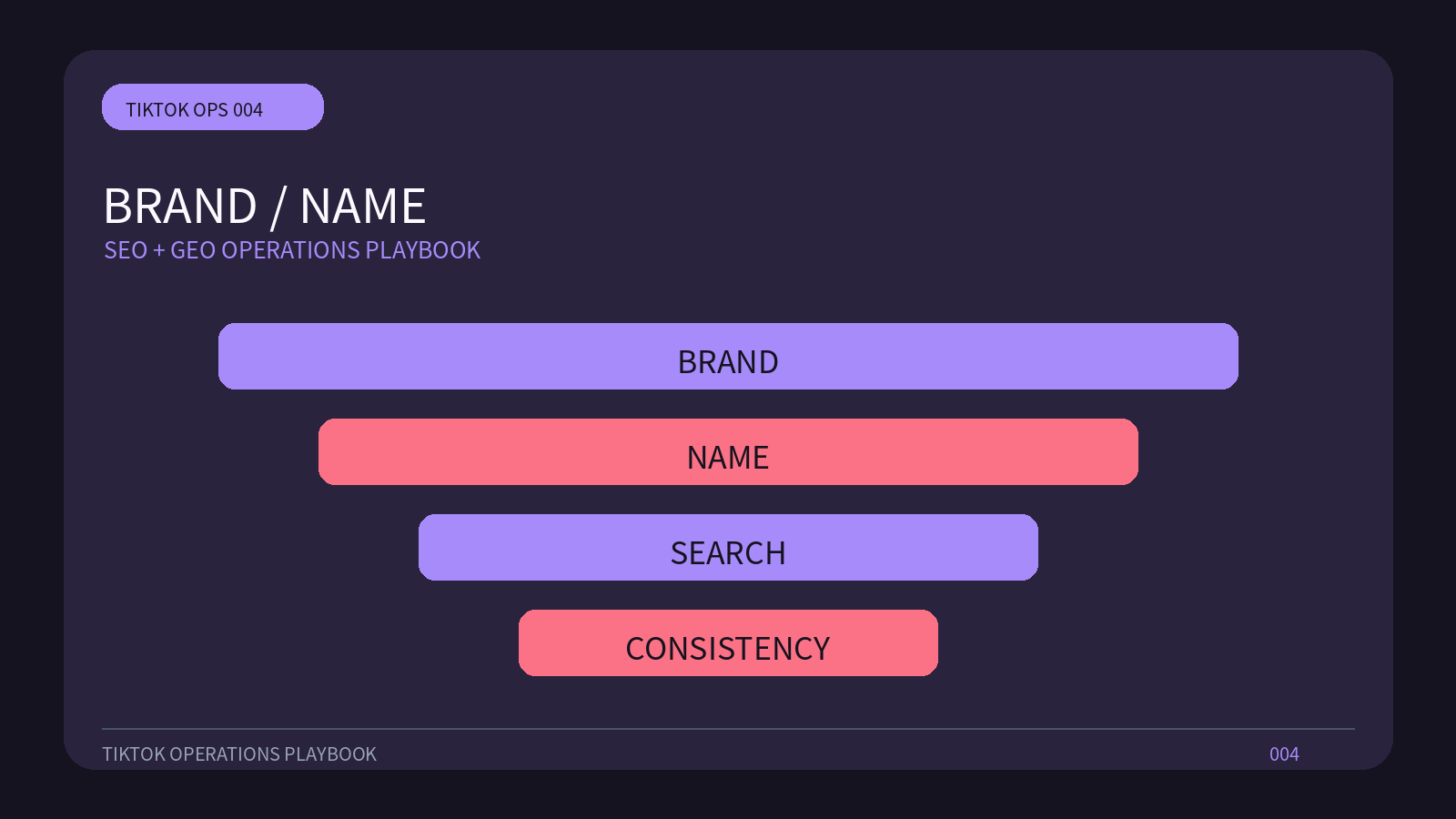
In order for TikTok’s username to be optimized, the project record must contain at least a reference number, release time, target market and four check points: BRAND, NAME, SEARCH, CONSISTENSY.
Two questions are also answered at the same time: whether “the identification through brand search, direct access and the oral testing of clients” is achieved, and whether “the year of accession, meaningless symbols or excessively long keywords add input errors.” The former decides whether to continue, while the latter decides whether a pause, error or additional explanation is required.
The risk of being most easily overlooked is that entry errors will increase by the year of accession, meaningless symbols or excessively long keywords. Short-term data may still rise, but the wrong audience and wrong promise will be exposed at the passenger service, return or sale stage.