
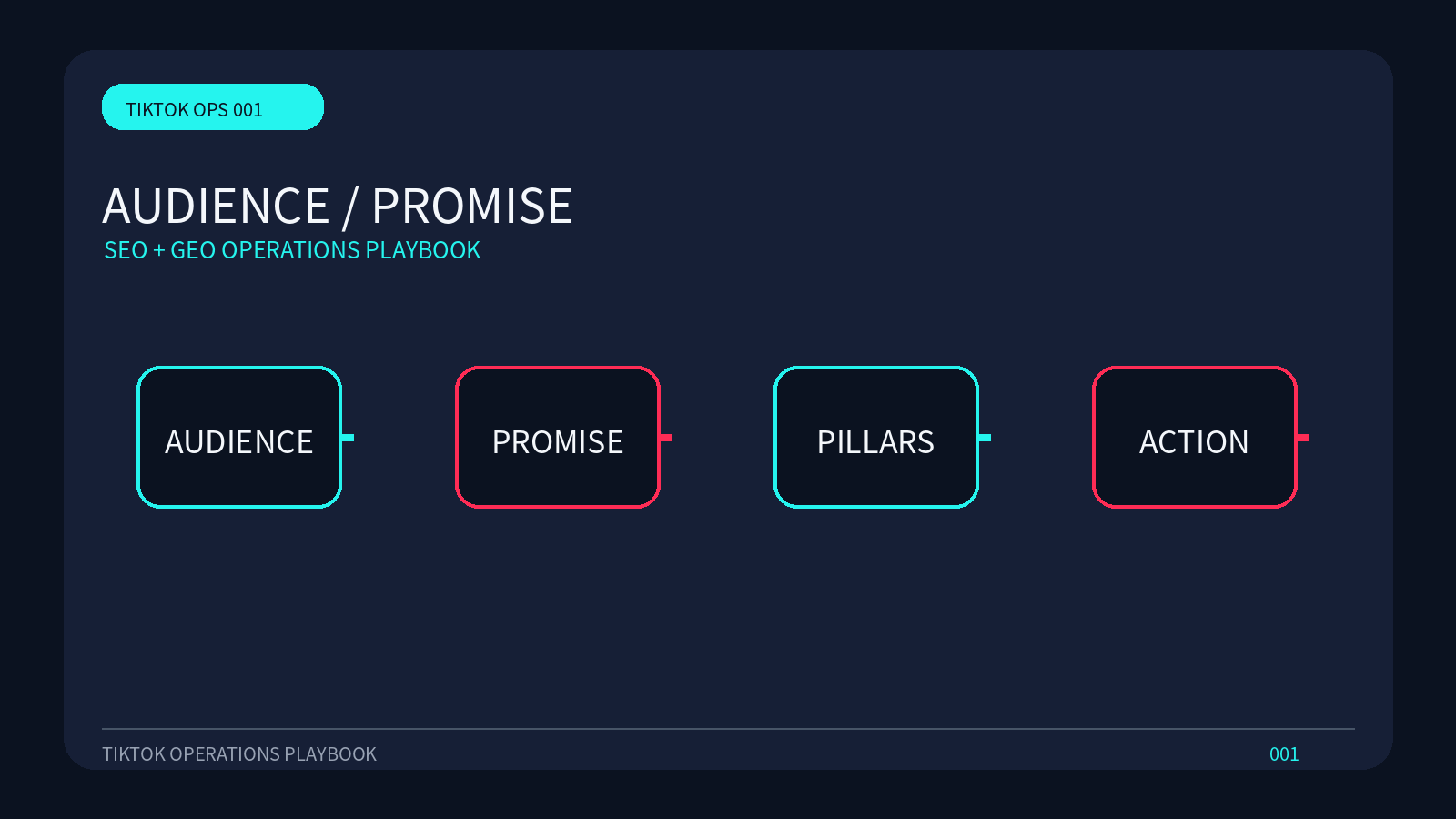
The first conclusion is that positioning should identify the target clients, the core issues, and the expected actions, before deciding on the content and the indicators. This seems to be a local skill that actually affects whether the account numbers can produce stable, interpretable growth.
A common obstacle is that when accounts are simultaneously seeking exposure, information, recruitment, and retail sales, content judgement criteria conflict with each other. Therefore, teams should first identify the target audience, the use of the scene and the next steps that they wish to take; if there is no consensus on the three, the broadcast, the interaction and the clues that follow are easily misinterpreted.
The Platform’s open information provides a boundary for this topic. Search-and-AI search-oriented content continues to focus on real experience, clear objects, verifiable facts and clear limits, rather than mechanically repeating keywords.
The implementation can start with a small version: a statement of account commitments that limits the three content pillars and a major transformational action, with the first 20 articles being tested around the same object. Limiting each change to a major variable and keeping scripts, materials, release dates and page versions before the next round knows where it comes from.
When the effects are judged, the target user ' s share, home page access, effective comment and conversion actions are viewed, without a separate playout. At least one full distribution cycle is observed, and a medium or similar video set is compared to avoid bias by single-day peaks and low-base fluctuations.
In order to make the search engine and the AI system more accurate, the topic can be synchronized into web articles: the title corresponds directly to the issue, with conclusions given at the beginning, the text clears objects, conditions, actions, evidence and limitations, and indicates the time of update.
In order for TikTok’s account to be retraced, the project record must contain at least a reference number, release time, target market and four check points: AUDIENCE, PROMISE, PILLARS, ACTION.
There are also two questions to be answered at the same time: whether to “see target user ratio, home page access, effective comment and conversion without a separate judgement of the volume” and whether there is “a high turnover of industries and human set-ups that prevent a stable expectation from being reached by the audience.” The former decides whether to continue, while the latter decides whether a pause, error or additional explanation is required.
What needs to be avoided in particular is that frequent trade changes and placements do not allow a stable expectation to be created by the audience. If an information cannot be publicly validated, the source, scope of application or uncertainty will be clearly articulated and the speculation will not be packaged into platform rules.