
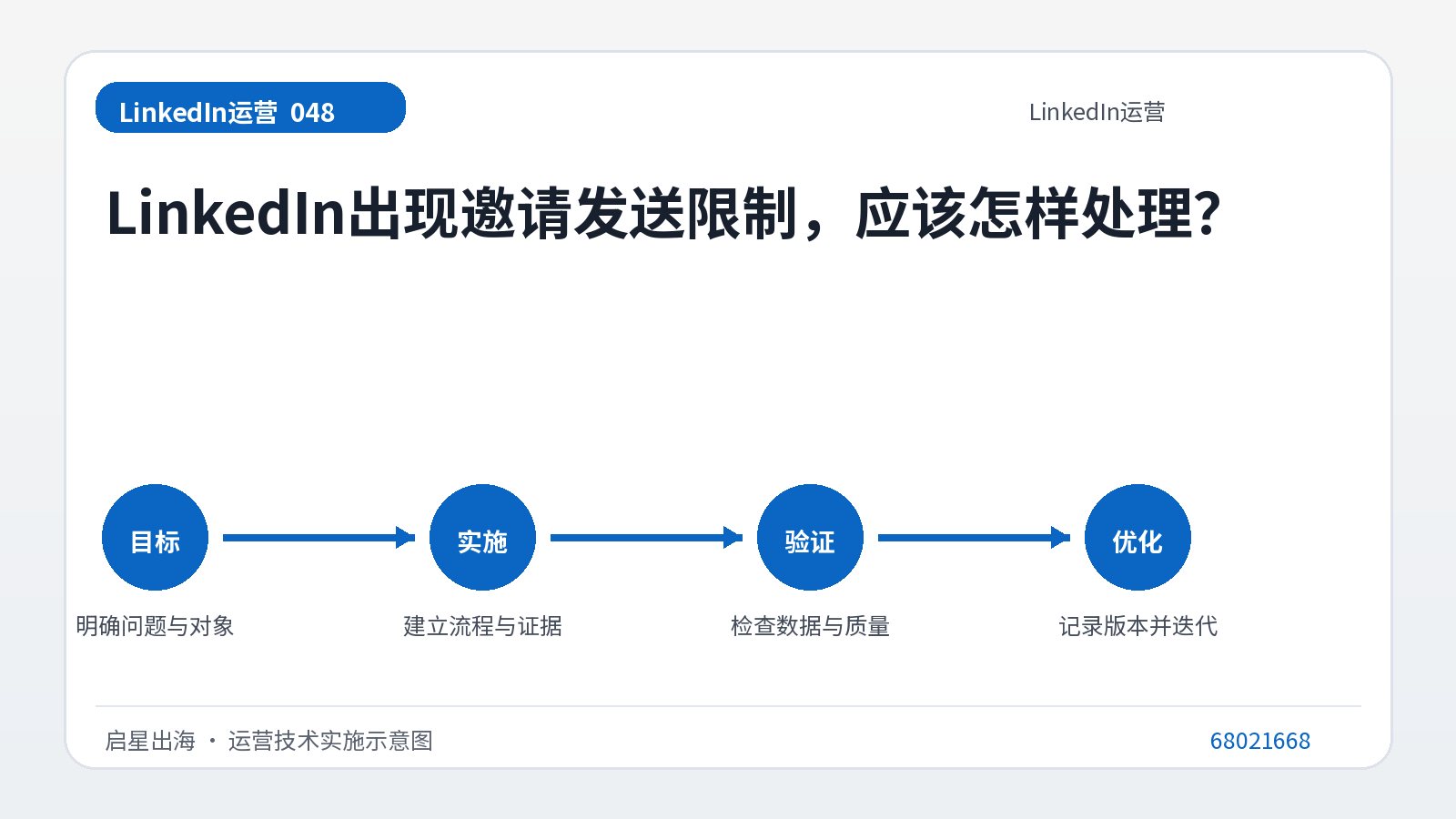
To solve this problem, the four-step method of "cause-action-indicator-decision" can be adopted.The current reason is that large, concentrated, or low-acceptance invitations and suspicious automated behavior can trigger platform protection mechanisms, which can cause at least one of customer relevance, trust, or subsequent conversions to decrease.
In terms of action, first stop the expansion immediately, withdraw long-term irrelevant pending invitations, improve the quality of the target and wait for recovery according to official prompts.At the same time, verify the company and role first, choose follow, interact, invite, ordinary message or InMail path, and then use the contact reason, business scenario, evidence and a question to complete the first contact., ensuring that customers use consistent positioning, parameters, cooperation conditions and action instructions at every step from seeing the information to entering the sales process.
When it comes to metrics, don’t just look at a single cost or engagement volume.The operation side needs to observe the invitation acceptance rate, InMail or message response rate, effective response rate, negative feedback, data access and demand confirmation rate; the sales side needs to verify the company, role, application, number of specifications, time and follow-up stages.In particular, this question requires long-term monitoring of the acceptance rate, pending volume, and limit records.
In terms of decision-making, samples, observation periods and quality bottom lines are pre-set for each test.Don’t rush to draw conclusions when you haven’t reached the basic amount of data; don’t waste it for a long time just to “continue learning” when it obviously attracts the wrong crowd.The goal of stranger development is not to sell with the first message, but to quickly understand the basis for contact, relevant value, and low-pressure next steps, while strictly respecting the platform's invitation and message rules.
Finally, write the results into the SOP: which conditions should be retained, which situations need to be changed, and which signals can be amplified.First touch is not a one-time setup, but a process of continuous collaboration between marketing, content, data and sales.Solutions that increase the chances of effective conversations and quotes are truly replicable.
When this question is implemented, you can first use a small group of real target accounts to verify: stop the expansion immediately, withdraw long-term irrelevant pending invitations, improve the target quality and wait for recovery according to the official prompts.After execution, don't just judge by feeling, but monitor the acceptance rate, pending volume and limit records for a long time; at the same time, save the customer identity, version, date and subsequent sales results to avoid mistaking accidental replies for replicable methods.



