
This question cannot be answered with a one-size-fits-all setting.The decision-making cycle of foreign trade B2B is long. First of all, we must determine whether the data is poor because no one has looked at it, because they are not interested, or because they are interested but have not entered the sales process.The most questionable thing at present is that the advertisements and forms do not clarify the purchasing identity, company conditions and cooperation scope, and anyone can easily submit them.
It is recommended to conduct a reverse check first: work backwards from the final quotation opportunity you want to obtain, and determine what content the customer needs to see, what evidence to obtain, where to click, and what information to submit.Lead Gen Forms reduce submission friction, but B2B delivery ultimately optimizes leads that enter the sales process; forms, CRM, responses, and offline results must be connected.If these steps are not connected, optimizing for reach, clicks, or fans alone will be difficult to produce stable results.
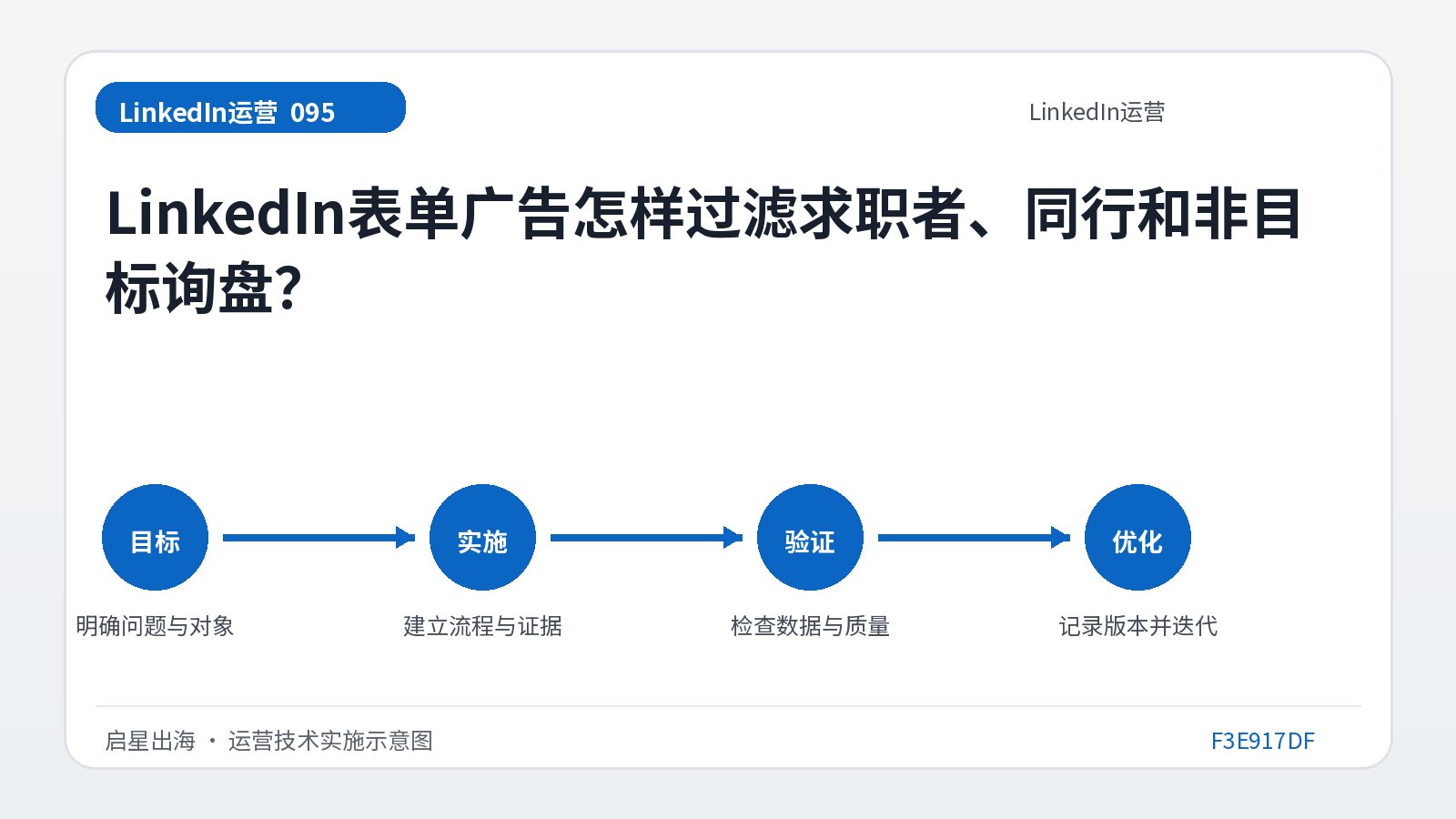
The first action in this question is: exclude obviously irrelevant groups from the audience, and clearly state the B2B target and scenario in the copywriting and qualification questions.Then follow the steps of "design ads and forms with clear value, add the minimum necessary qualification fields, send test leads, automatically or timely store them in the database, follow up at levels and review the validity, quotations, business opportunities and transactions." Check each item one by one.Don’t change positioning, materials, audiences, and hosting pages on the same day; if you change too many variables at once, you won’t be able to replicate the results even if they get better.
Two sets of data are used when measuring: the platform side looks at form opening and completion, effective lead rate, sales acceptance rate, first response time, appointment or quotation rate, opportunity cost and transaction contribution; the sales side looks at company matching, demand authenticity, quotation possibility and follow-up results.In particular, statistics should be collected based on the causes of invalidity and the sources should be corrected to prevent the operations team from only reporting good-looking superficial data.
A practical judgment is: if the data is small but the customers are accurate, it can continue to be accumulated; if there is a lot of data but the customers are wrong, the screening and expression should be corrected immediately.It takes a week to observe execution problems, a month to judge trends, and then a complete procurement cycle to test whether the increase in leads actually creates business opportunities.
When implementing this question, you can first verify it with a small group of real target accounts: exclude obviously irrelevant groups from the audience, and clearly state the B2B target and scenario in the copywriting and qualification questions.After execution, do not just judge based on your feelings, but make statistics based on the reasons for the failure and correct the source; at the same time, save the customer identity, version, date and subsequent sales results to avoid mistaking accidental replies for replicable methods.



