
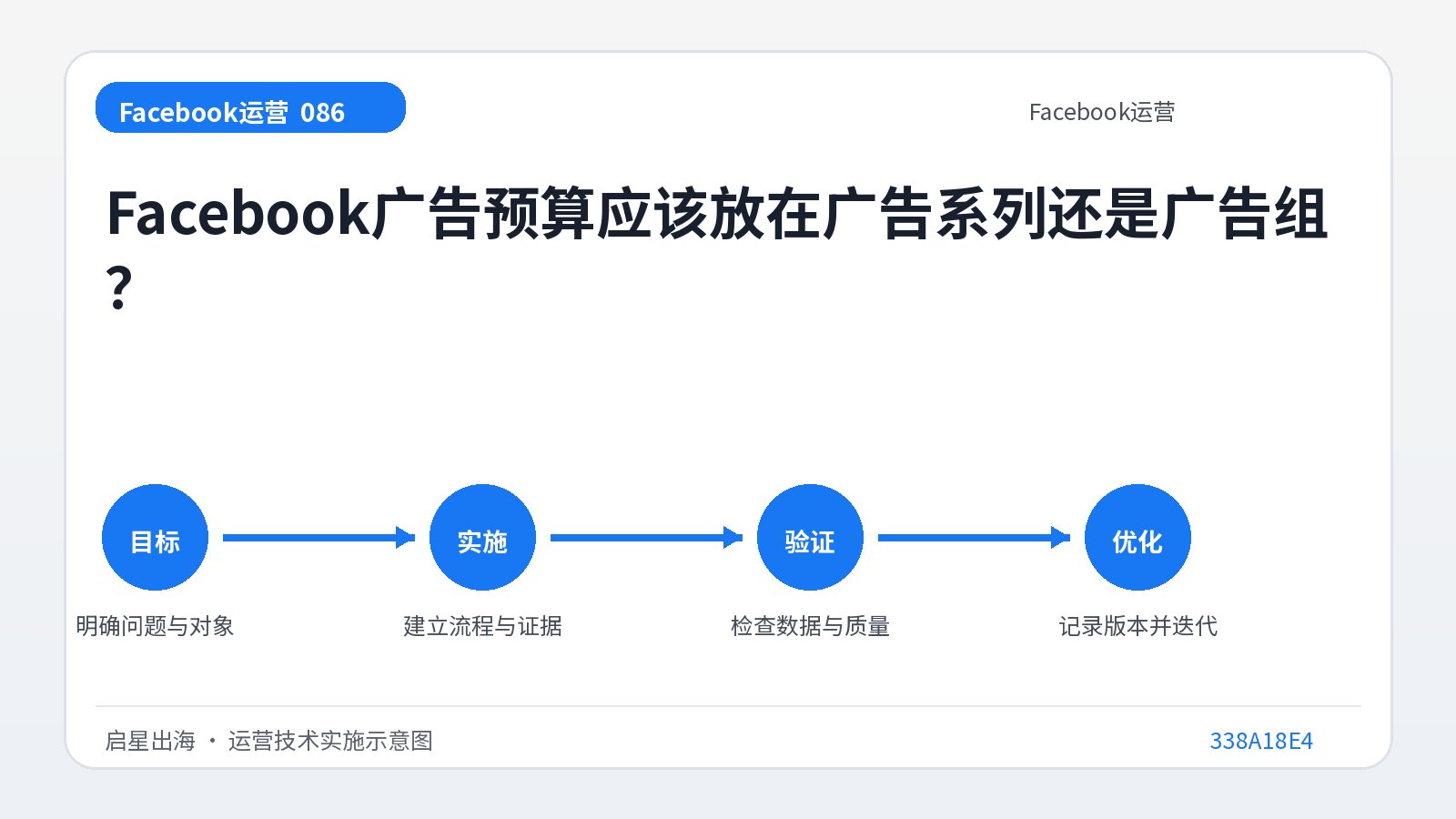
To solve this problem, the four-step method of "cause-action-indicator-decision" can be adopted.The current reason is that series budgets are easier for the system to allocate across ad groups, and ad group budgets are better for controlling individual countries or test units that will reduce at least one of customer relevance, trust, or subsequent conversions.
In terms of action, you can use ad group control when you need fair comparison during the initial exploration period. After you have a stable winner, you can test series budget expansion, but you must set clear boundaries.At the same time, define the test hypothesis and stopping conditions first, keep the structure relatively stable, compare the results according to a sufficient observation window, and then move the budget to a better combination of effective leads and business opportunities., ensuring that customers use consistent positioning, parameters, cooperation conditions and action instructions at every step from seeing the information to entering the sales process.
When it comes to metrics, don’t just look at a single cost or engagement volume.The operation side needs to observe the amount of optimization events, learning status, effective lead cost, sales acceptance rate, frequency, conversion rate and result fluctuation; the sales side needs to verify the company, role, application, number of specifications, time and follow-up stages.This question specifically compares budget allocation, event volume, and effective lead cost.
In terms of decision-making, samples, observation periods and quality bottom lines are pre-set for each test.Don’t rush to draw conclusions when you haven’t reached the basic amount of data; don’t waste it for a long time just to “continue learning” when it obviously attracts the wrong crowd.Advertising optimization requires sufficient and stable data. Frequent changes, excessive budget dispersion, or only chasing a single day's low cost will distort judgment.
Finally, write the results into the SOP: which conditions should be retained, which situations need to be changed, and which signals can be amplified.Budget optimization is not a one-time setting, but a process of continuous collaboration between marketing, content, data and sales.Solutions that increase the chances of effective conversations and quotes are truly replicable.



