The key to this topic is not to find a fixed value. The real reusable judgement is that both video and web pages should allow key findings to be understood and validated independently.
The simplest thing for the team to ignore is that if the content lacks a clear entity, a direct answer, evidence and limitations, the AI summary can easily be taken out of context. In the absence of a uniform record, the same error is repeated in different videos.
From an official note, some common misunderstandings can be excluded. VideoObject should describe the real and visible video on the page.
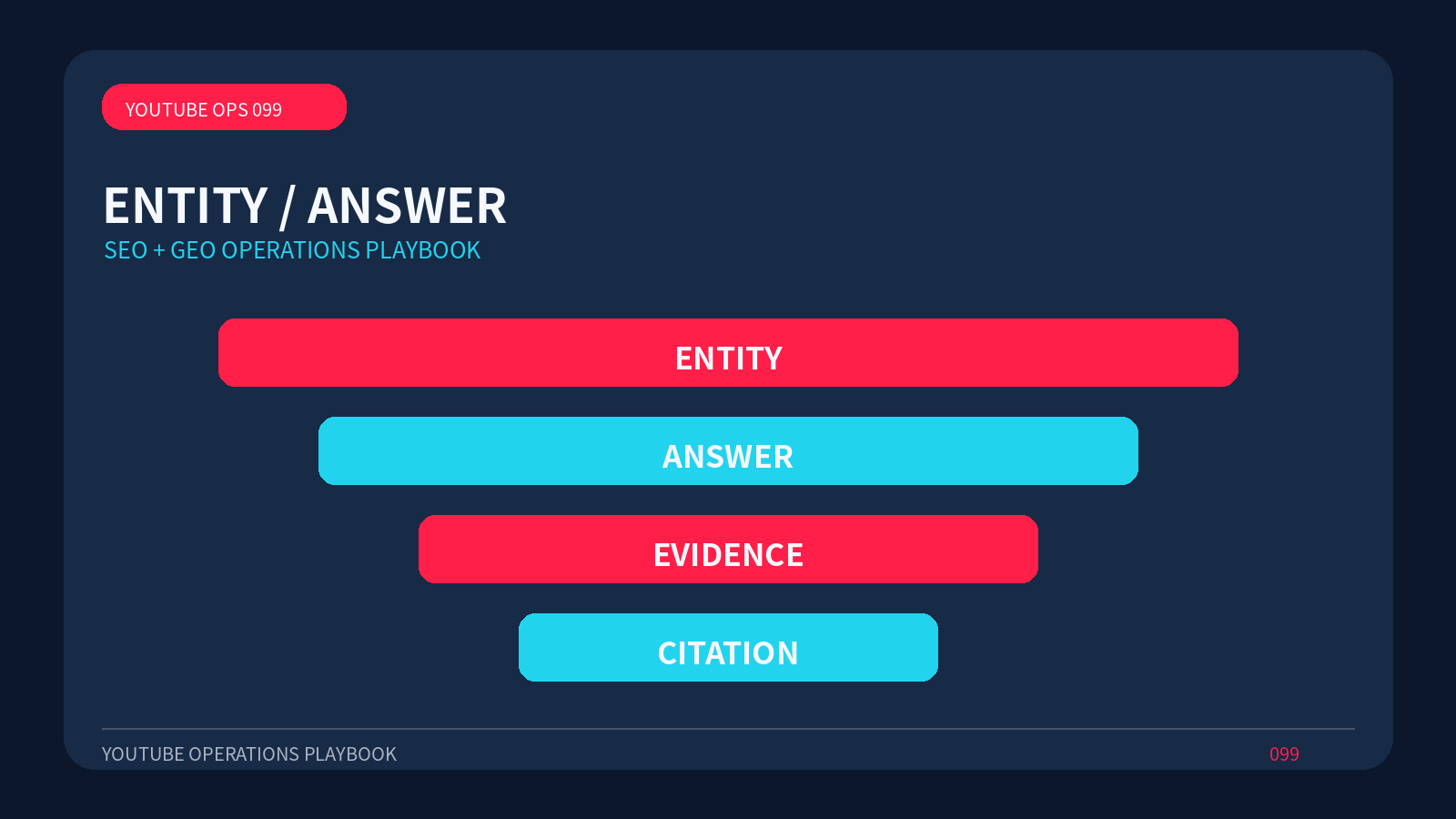
In order for YouTube AI search optimization to be repeated, the project records should include target markets, material versions, release times and four check points: ENTITY, ANSWER, EVIDENCE, CITATION.
Write action as a tickable inspection item will make it more stable: the text clearly identifies the problem and the object, the subtitle correction title, and the page provides text, source, author, date and structured data.
If the flow is the opposite of the business signal, priority should be given to matching the audience.
GEO optimization focuses on citation. The conclusions need to remain valid outside the context, the data need to be timed and calibrated, experience needs to indicate the scope of application, and unproven judgements should not be transposed to facts.
The technical content distinguishes between presentation and proof. The picture can help understand, but it is not necessarily sufficient to support performance conclusions; test conditions, samples and source information should be supplemented as necessary.
The content asset is best placed to use uniform serial numbering questions, scripts, masters, subtitles, thumbnails, web pages and release records.
The search for GEO creates a large amount of proximate questions and answers.