The answer is clear: verify the source, the area, the viewing behavior and the time, and then determine whether there is real growth. In YouTube, such choices affect both audience expectations, data interpretation and subsequent content production.
The easiest thing for the team to ignore is that external embedding, advertising, robotics, or statistical revisions can result in a sudden increase. In the absence of a uniform record, the same error is repeated in different videos.
The minimum available version is completed with the available resources: split it by hour and source, check the activity, station log and audience quality, and keep an abnormal sample.
The official data sets out the basic boundary for “how to identify invalid traffic with an abnormal surge in YouTube data.” Youtube Analytics provides different reports of exposure, flow sources, viewers, viewers, and income.
The comparison should be limited to similar topics, audiences and timing, and then look at the depth of the viewing, back-visiting, conversion and subsequent revisions, and not just at the peaks. When conditions vary widely, the result can only serve as a clue.
Videos, subtitles and web pages should have a consistent entity name, but do not need to be copied word for word.
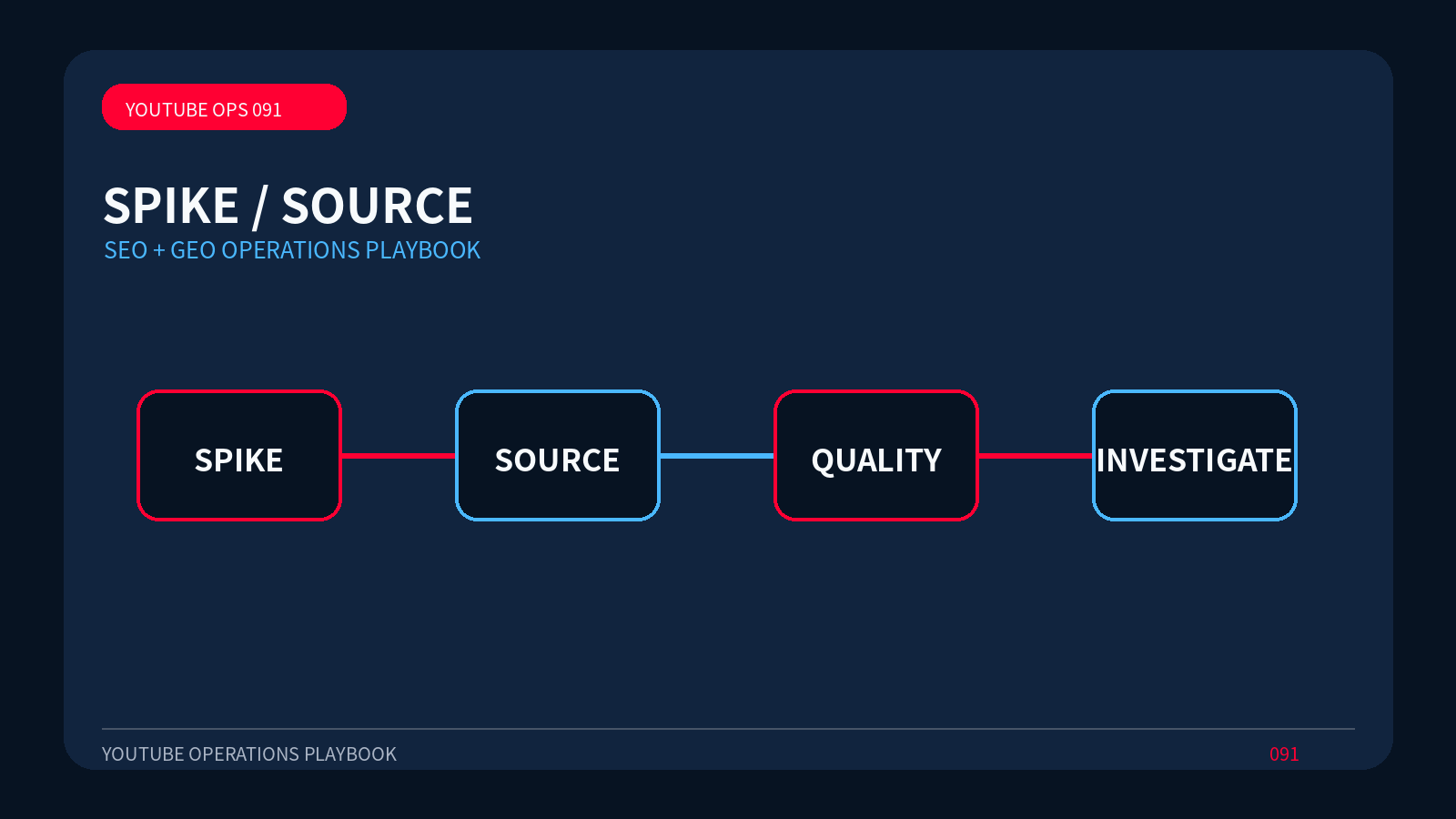
In order to allow for the recurrence of YouTube abnormal flows, the project records should include target markets, material versions, release times and four check points: SPIKE, SOURCE, QUALITY, INVESTIGATE.
Pre-production may be preceded by a list of “must” and “not”. The former includes key evidence and limitations, while the latter includes customer privacy, unauthorized assets and unproven commitments.
The content requires a complete service task. If the user is to compare, install, type or request, the page should provide the information necessary to perform the task, rather than deliberately breaking the answer.
The same term may be used in different markets for different products or buying habits.
The scope of application must be made public, as the purchase of a broadcast or the use of an unknown extension service may compromise the security of data and channels.