In the case of YouTube, do not rush to copy popular channels.
It is important to ensure that the facts and rights are correct, that their judgement is presented, that independent scripts and evidence are used, that records of the production process and source material are kept, and that, finally, packaging and production are optimized.
Simple collage, translation, or batch templates may lack clear original contributions. This means that partial optimization cannot be separated from channel audience commitment and asset governance.
From an official point of view, some common misconceptions can be removed. The YouTube liquidity policy examines whether the channel and content are original, advertising-friendly and relevant.
The data level allows a sample of the theme, text and image of the adjacent video, and the actual benefits to the user.
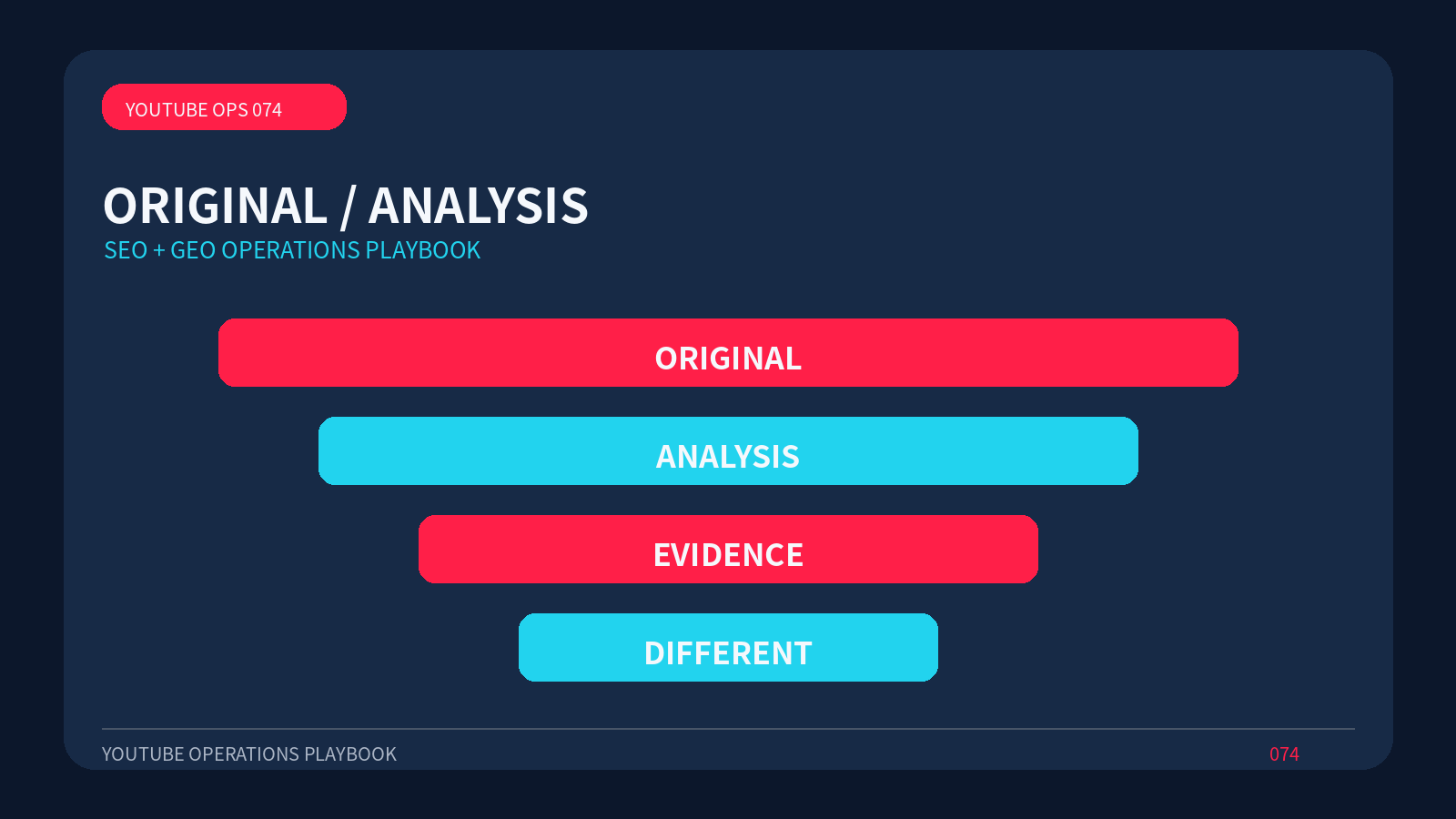
In order for YouTube to repeat its use, the project records should include the target market, the material version, the release time and four check points: ORIGINAL, ANALISIS, EVIDENCE, DIFFERENT.
The page should not only be embedded in the player. It should also provide access to summaries, chapters or steps and fully align structured data such as VideoObject with actual video, thumbnails and release dates.
If the video is used for advertising or sales, the natural and commercial versions should be kept. The two can share facts and material, but the music authorization, disclosure, call for action and landing page requirements may differ.
The result, contrary to expectations, is to check for visibility, permissions, material versions, date ranges and links before discussing algorithms or selections. Many anomalies come from basic configurations.
Commenting on the original text reveals how the user describes the problem. The next article can follow the true expression, but the removal of personal data cannot be considered a general conclusion.
The scope of application must be made public, as changes to the title, voice or background alone do not necessarily prove the content to be of independent value. Experience with a particular region, subject matter or channel cannot be written directly into general rules.