From the viewer to the next step, you have to understand and trust. For YouTube VideoObject, structured data must describe a real, visible and available video on the page.
The official data sets out the basic boundary for “How VideoObject structured data is deployed”. VideoObject should describe the real and visible video on the page. Names, descriptions, thumbnails, upload dates and video addresses need to be consistent with the page content and checked through a test tool.
When you land, a small sample is recommended: fill in name, description, thumbnailUrl,uploadDate and enterUrl or embedUrl, and verify the capture results. Only one major variable is changed each time and the script, material, release date and background settings are kept.
The signal that really needs to be diagnosed is " a field that is not consistent with the page content, or a video is not a page subject, leading to a mischaracterization of the mark " . Before expanding production, you should check a full selection to the conversion link.
If the flow is the opposite of the business signal, priority should be given to matching the audience.
If the subject matter is related to the product page, the case page or the help page, this section can be given the role of explaining the problem and then connect to the next step with a descriptive anchor text, avoiding competition among several similar pages.
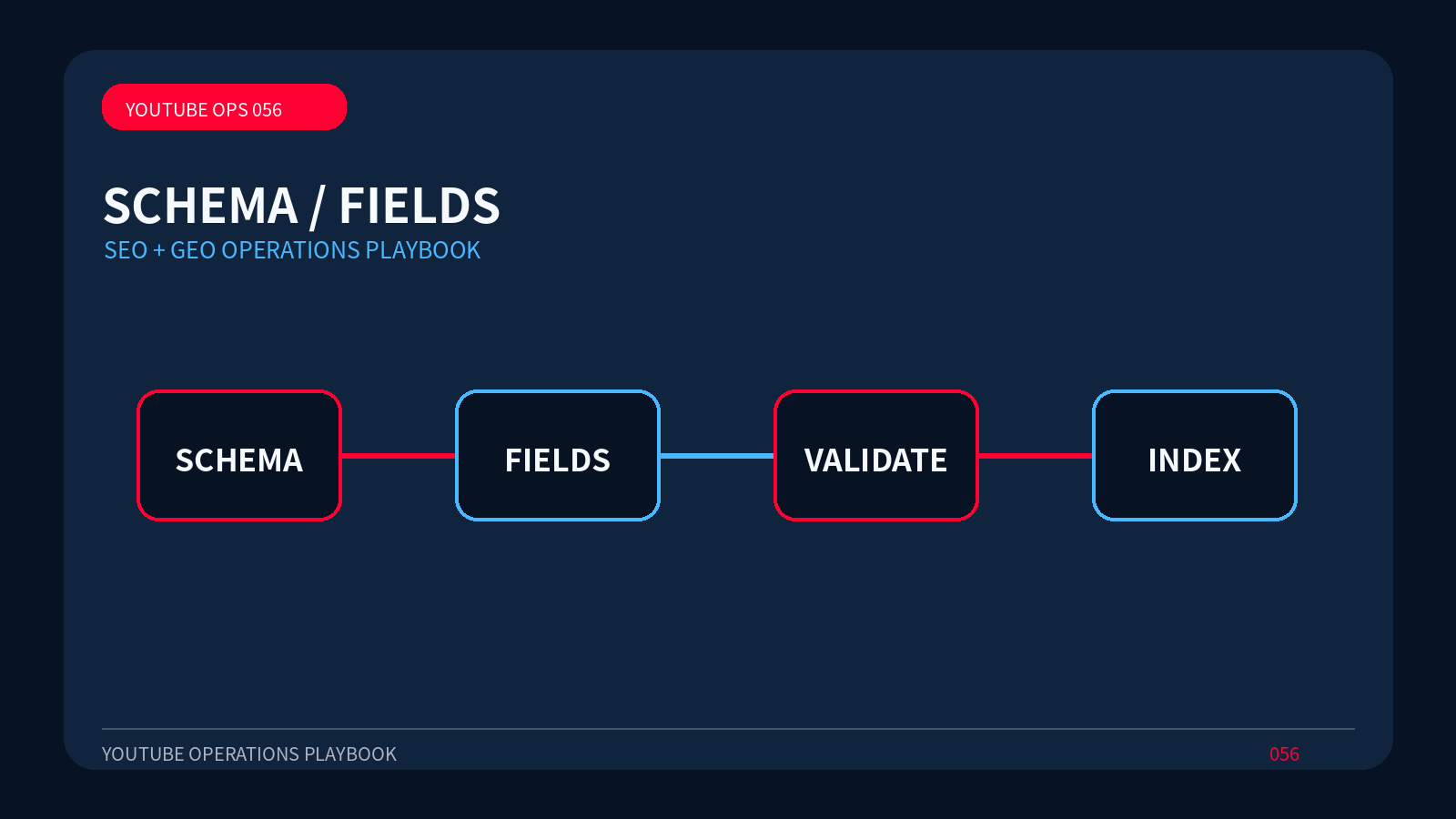
In order for YouTube VideoObject to be available again, the project records should include the target market, the material version, the release time, and four check points: Schema, FIELDS, VALIDATE, INDEX.
The content asset is best placed to use uniform serial numbering questions, scripts, masters, subtitles, thumbnails, web pages and release records.
The same taskcard should be used for team work.
Without this information, it is difficult for follow-up staff to judge whether the content is still available.
A reverse check is performed before the release: a forged time, date or thumbnail is not a substitute for an accessible viewer.