Many errors are not that the tool will not be used, but the goal is not defined. When dealing with the topic, the first image should allow the user to understand the object, the action or the result and to follow the text.
From a new viewer’s perspective, slow and blurry images in a vertical stream allow users to remove them immediately. Inner people familiar with the product tend to be unaware of information gaps, and therefore need to be seen by a second person.
Write the action as a tickable checker: remove the Logo animation from the key action, problem or product, and subtitles can also confirm the subject in silent state. Each completed item should correspond to the document, image, text or background record.
If the flow is the opposite of the business signal, priority should be given to matching the audience.
The platform’s public information can confirm the basic conditions, not the secret to securing the outcome. Shorts is the creation and viewing format for fast consumption of the vertical screen, and the product capacity and the time rule may be updated.
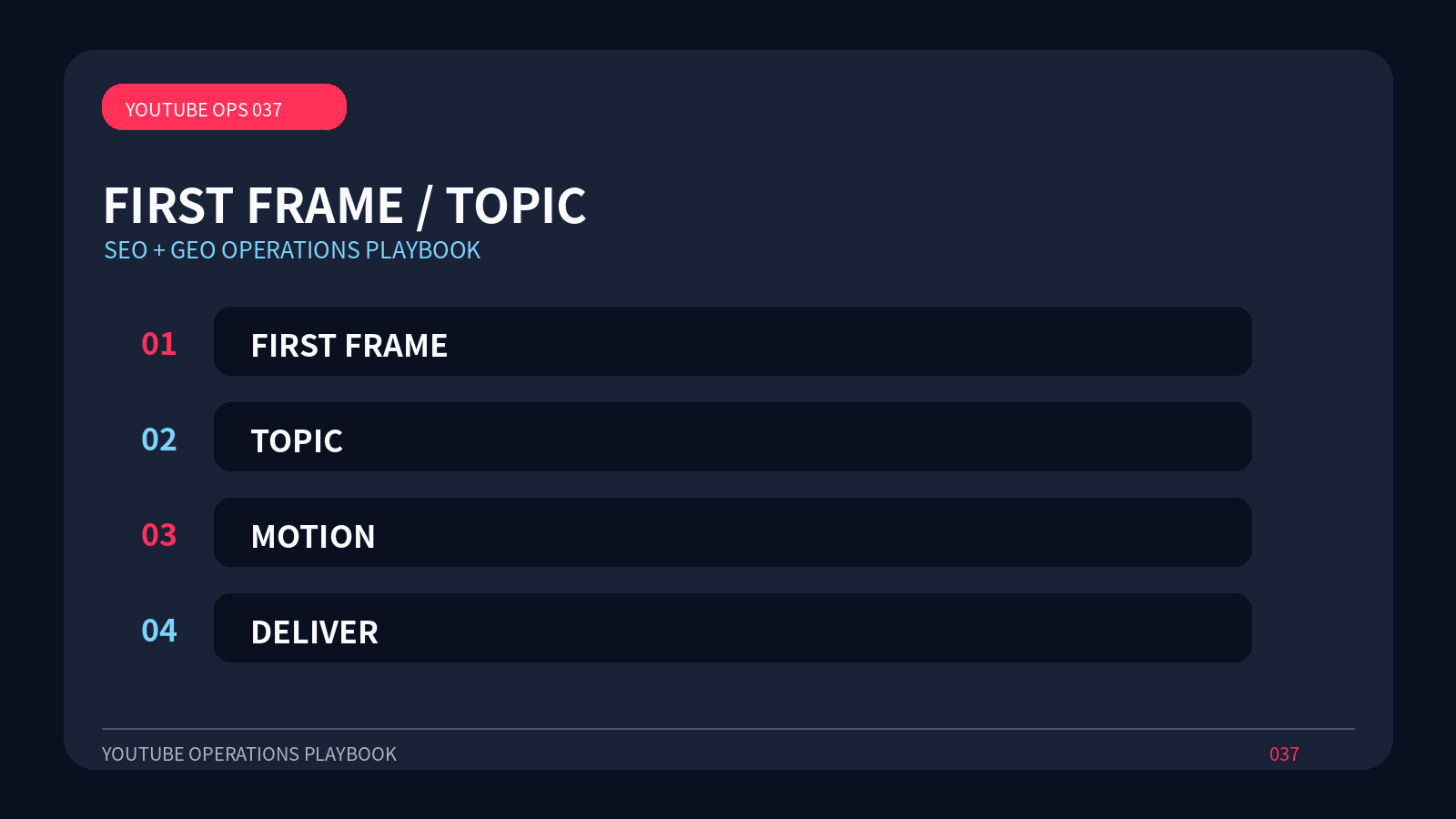
In order for YouTube Shorts to be reproduced at the beginning, the project record should include the target market, the material version, the release time and four check points: FIRST FRAME, TOPIC, MOTION, DELIVER.
The use of non-fiscal or false results to create a stopover leads to negative feedback and low confidence. The amount of viewing exchanged with false expectations is not equal to effective growth.
Pre-production may be preceded by a list of “must” and “not”. The former includes key evidence and limitations, while the latter includes customer privacy, unauthorized assets and unproven commitments.
The content requires a complete service task. If the user is to compare, install, type or request, the page should provide the information necessary to perform the task, rather than deliberately breaking the answer.
The same term may be used in different markets for different products or buying habits.
Search optimization does not duplicate words such as “youtube operations”. Natural writing of brands, products, areas, roles and problems is more conducive to establishing physical relationships than stacking keywords.