
From an operational perspective, the key to this issue is not “whether LinkedIn can do it”, but whether the current actions serve specific customers.A common problem is: treating tool upgrades as strategy upgrades without first verifying the target market, filtering conditions, and daily follow-up capabilities.
It is recommended to first create a customer decision-making table and write down the target customers, the scenarios that trigger the demand, the most worrying risks, the required evidence and the acceptable next step.The efficiency of active development is first determined by the ideal customer profile and the quality of the target account. Precise search is not a pile of product keywords, but a combination of industry, region, scale, application, position and business signals.This form prevents content or advertising from saying only what the company wants to say.
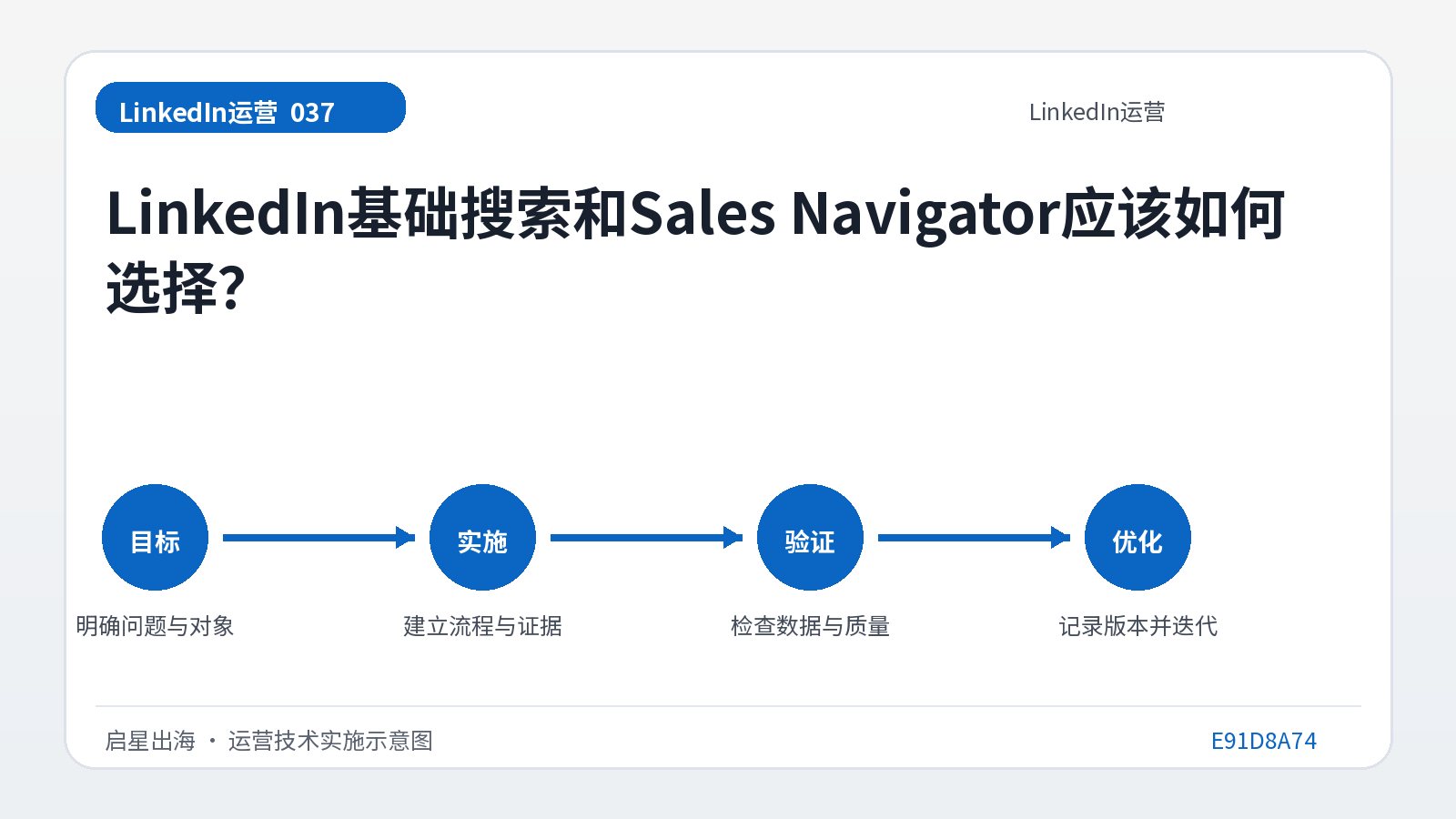
The implementation action for this question is: if the list is small, use basic search to verify it first, and then evaluate Sales Navigator when it is necessary to continuously filter by multiple conditions, save clues and reminders.After completion, define the ICP and exclusions in order, then create a target company list, decision-making role map, search formula and verification field, and save and review them in batches in Sales Navigator or basic search..If multiple people are involved, the same set of product parameters, cooperation conditions, effective lead definitions and response criteria must be used to prevent customers from obtaining conflicting information at different links.
Review the target company's matching rate, decision-making role coverage, effective list rate, data access, response rate, and conversations that enter into demand confirmation every week, and randomly check real interactions and conversations.The quality inspection of this question focuses on judging the output of effective lists and the efficiency of business opportunities per capita.When it is discovered that invalid customers are concentrated from a certain theme, country or entrance, priority should be given to correcting the source rather than just asking sales to strengthen follow-up.
A healthy proactive development system will gradually increase customer relevance and sales effectiveness, even if surface volume does not grow rapidly.As long as effective conversations, quotation opportunities, and trackable business opportunities continue to improve, the direction is right.
When implementing this question, you can first verify it with a small group of real target accounts: if the list is small, use basic search to verify it first, and then evaluate Sales Navigator when you need to continue to filter by multiple conditions, save clues and reminders.After execution, don’t just judge based on your feelings, but judge based on the effective list output and per capita business opportunity efficiency; at the same time, save the customer identity, version, date and subsequent sales results to avoid mistaking accidental replies for replicable methods.



