
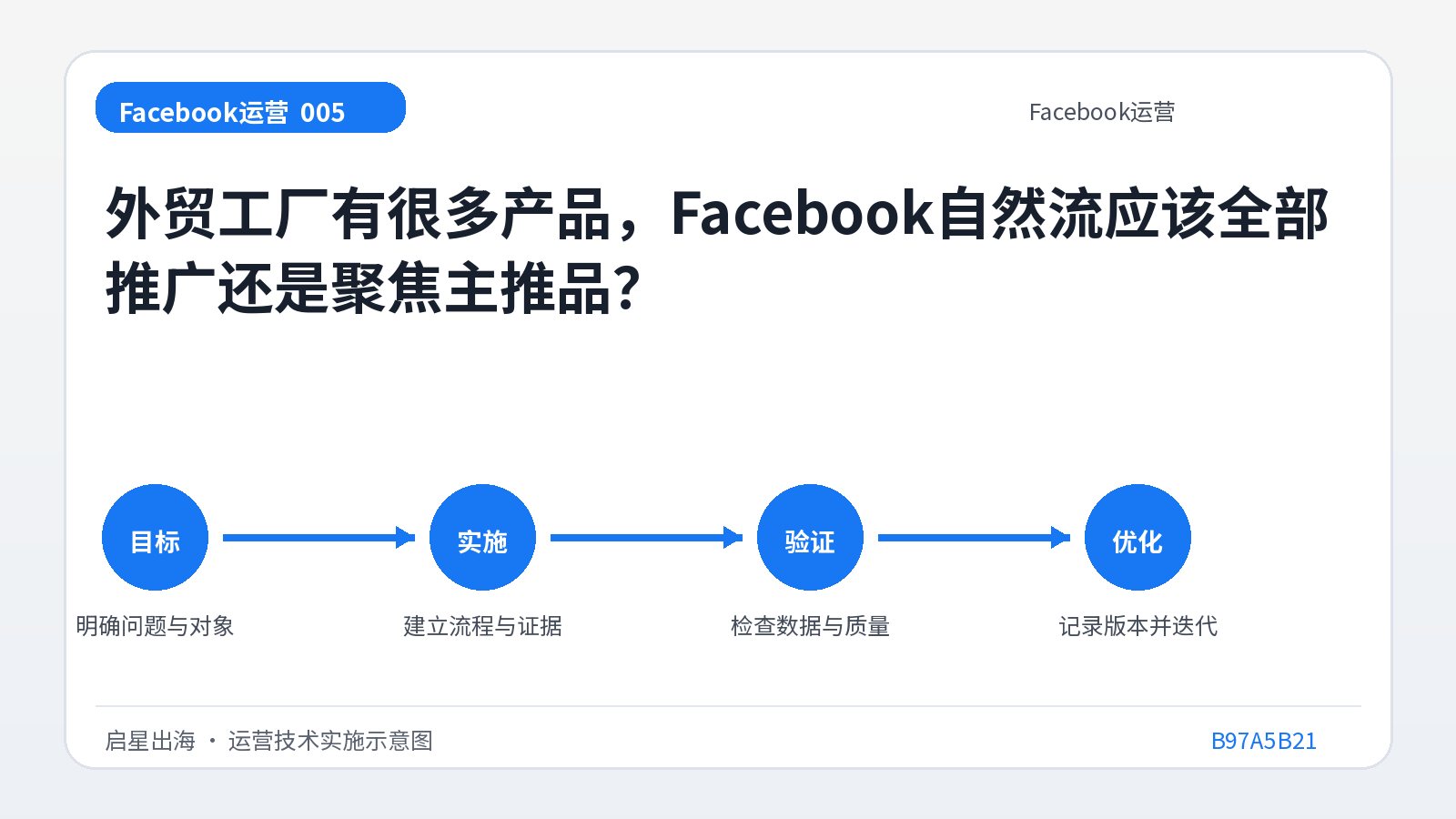
Too many unrelated products dilute account positioning and prevent buyers from quickly understanding the factory’s strongest offer.
Organic reach is not a stream of product photos. Its purpose is to help the right buyer recognize relevance, verify credibility and take a clear next step. Map the complete path from first view to Page or website visit, message, submitted requirements, qualified lead and quotation. A weak link at any stage can make an otherwise strong post appear ineffective.
Choose one to three product families with strong margin, competitiveness, proof and supply stability. Use other products as supporting solutions. Test one product difference at a time and define when a weak series should be stopped.
Change one important variable at a time and keep a record of the date, hypothesis, audience, content version and expected outcome. Start with target country, customer type, buying situation and priority product. For each customer group, prepare four content families: pain points, evidence, solution and call to action. This creates a learning system instead of disconnected posting.
Track engagement, document requests and quotation requests by product family. Review Page visits, engagement from target accounts, message starts, qualified enquiries and website visits together. Sales should also verify company, role, application, specification or quantity, timing and next step. Low-cost engagement is not success when it cannot become an informed business conversation.
Classify each review decision as keep, improve, stop or scale. Expand to more countries or products only after customer relevance, useful conversations and traceable sales opportunities improve together.



